
Tax Reduction Strategies for U.S. Business Owners: A Decision Guide
Start with the decision, not the headline tax result
Lawful tax planning approaches are evaluated against your business activity, tax position, records, and continuing obligations. They are not a single product or universal formula. For a U.S. business owner, the useful decision is which category deserves investigation first and what conditions would have to be satisfied before implementation.
Your starting point should be the operating business rather than a promised rate. The business entity affects the federal income-tax return the business files. An LLC is created under state law, while its federal tax treatment depends on the applicable classification or election. That means a structure cannot be assessed separately from the activities, owners, income, and filing obligations it is meant to organize.
A practical screen separates the main categories before you compare them:
- Business structure: examine how the entity and its federal tax treatment fit the operating business.
- Accounting and income timing: examine whether the accounting method presents income clearly and whether a proposed timing change has a defensible business basis.
- Deductions, credits, and losses: identify allowable items and build the records needed to support them.
- Investments and reinvestment: define the business or personal objective before treating a tax effect as a reason to act.
- Cross-border planning: map the countries, activities, entities, and compliance responsibilities involved.
- Relocation and foreign tax residency: separate immigration status, physical presence, tax residence, and the resulting U.S. questions.
Lawful planning stays inside the applicable tax rules and depends on accurate reporting and supportable records. A strategy that cannot be explained through the business facts, the relevant rule, and the available documentation should remain a question for investigation rather than a decision to implement. The rest of this guide gives you a way to make that screen.
Use four questions to screen every strategy category
Every tax-planning category should answer the same four questions before you spend money or reorganize the business. The questions keep an attractive label from replacing the work of checking fit, conditions, evidence, and obligations.
1. What changes in the business or your tax position?
Name the proposed change precisely. Is it a different business entity, a different accounting method, a claim for an expense or credit, a loss position, a new investment, a foreign activity, or a change in where you live? If you cannot describe the change without using a marketing label, the category is not yet defined. Connect the proposed change to the records and tax position it would affect; a recordkeeping system must show income and expenses clearly.
2. What condition must be true?
Identify the fact that makes the category relevant. The condition may involve ownership, the nature of the activity, the timing of income or expenses, the business purpose, the country involved, or your actual living pattern. Do not treat a proposed residence, entity, investment, or accounting method as proof that the condition exists. Write down the condition as a question that can be tested against your facts.
3. What evidence would support the position?
List the records before you decide that the strategy is available. Business books should summarize transactions and show gross income, deductions, and credits. Records should identify the source and amount of receipts, separate business and nonbusiness items, and track allowable expenses. A strategy that depends on facts you cannot document has a weak implementation path.
4. What obligations remain after the change?
A tax result does not erase filing, recordkeeping, entity, residency, or cross-border responsibilities. Ask which returns, schedules, records, registrations, and country-specific requirements continue. If a change introduces another country or entity, add the new obligations to the screen instead of comparing only the anticipated reduction.
Turn the four questions into a short screening note for each category:
- proposed change;
- required condition;
- records already available;
- records still needed;
- obligations that would remain or arise; and
- the question you want answered in a professional review.
This note keeps separate facts from assumptions. It also lets you compare a domestic structure question with a cross-border question without pretending that they require the same documents or carry the same administrative burden.
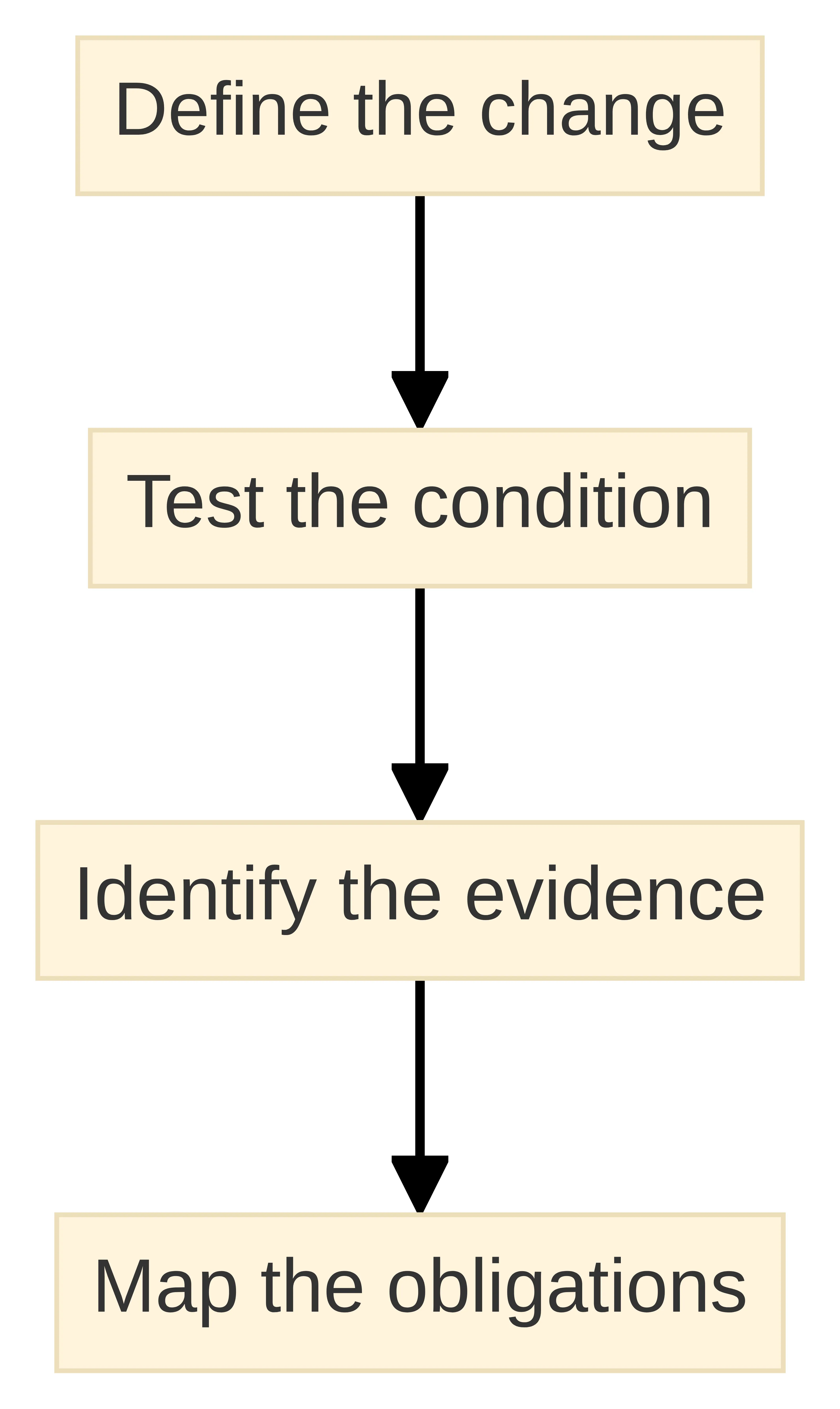
Use the four questions in order. First define the change, then test its condition, then identify the evidence, and finally map the obligations that remain. This sequence gives you a short list of categories worth deeper review without treating any category as suitable in advance.
Business structure: test tax treatment against the operating business
Business structure affects how a U.S. business reports income for federal tax purposes, but the tax form is only one part of the decision. The common forms include sole proprietorships, partnerships, corporations, and S corporations. An LLC is a state-law structure, and the federal return depends on its classification or election. Start by describing how the business operates, who owns it, where it conducts activity, and how money moves before comparing structures.
A sole proprietorship has a direct reporting relationship between the business and its owner. A sole proprietor generally reports business profit or loss on the owner’s personal return, where it is combined with other income and deductions. The owner is also personally liable for the business’s financial obligations and debts. Those facts make the structure relevant to both tax reporting and the owner’s broader exposure, but they do not by themselves establish that another structure would produce a better result.
An LLC requires a more specific federal tax question. An LLC’s filing treatment depends on its classification or election: an LLC treated as a C corporation files Form 1120, while an LLC electing S corporation status files Form 1120-S and reports owners’ shares on Schedule K-1. The relevant comparison is therefore not simply LLC versus corporation. You need to identify the classification, the filing treatment, the owners affected, and the business facts that make the election or classification relevant.
Use these structure questions in a review:
- What legal entity exists today, and under which state law was it created?
- What federal tax classification applies today?
- Who owns the entity, and how are ownership and profit rights documented?
- Which activities, assets, contracts, and workers belong inside the operating business?
- Which return does the business file, and which owners receive information from it?
- Would the proposed structure change administration, recordkeeping, or the way income is reported?
- What business reason supports the proposed arrangement apart from the desired tax result?
The last question matters because a structure should organize a real business arrangement. A paper change that does not match the operating facts creates a mismatch for the review.
A useful structure comparison has two columns of facts: the position today and the proposed position. Record the entity, classification, owners, filing form, income flow, decision-makers, and administrative responsibilities in each column. Then identify which differences are operational and which are only tax labels. This makes it easier to see whether the proposed arrangement changes the business itself, its reporting treatment, or both.
Do not select a structure from a tax label alone. The applicable return, ownership facts, and operating model must be considered together, and the resulting filing responsibilities must remain clear. If you cannot state the current classification and the proposed change, gather those facts before comparing possible structures.
Accounting and income timing: use only methods that clearly reflect income
Accounting and income timing strategies concern when business activity appears in the tax computation and how the accounting method represents that activity. A U.S. accounting method must clearly reflect income; if it does not, the IRS may require a method that does. The practical screen is therefore not whether a method appears to defer or accelerate income, but whether the method represents the business activity clearly and is supported by the books.
Before treating a proposed timing change as a planning category, identify the method the business uses now and the transaction pattern the method is intended to represent. Record the business reason for the proposed change, the income and expenses affected, and the period in which the effect would appear. A method that obscures income or produces a result inconsistent with the underlying activity should not be treated as an ordinary planning preference.
Use this timing checklist:
- Which accounting method is in use for the relevant activity?
- What income, expense, receipt, or payment does the proposed change affect?
- What business records show the transaction and its timing?
- Does the method clearly reflect income across the activity rather than only the desired transaction?
- What filings or supporting schedules would have to change?
- Does the proposed treatment remain consistent with the books and the business’s other records?
If the answer depends on a temporary description that the books cannot support, stop at the screening stage. The review should test the method against the full income picture, not just against a preferred tax year.
Prepare a timing file with the current method, representative transactions, the relevant book entries, the proposed treatment, and the reporting periods affected. Add a plain-language explanation of why the proposed treatment matches the business activity. This gives the review a concrete sequence to test instead of a general request to move income from one period to another.
Timing can be a legitimate category to investigate, but it is not a substitute for accurate accounting. Keep the method, the transaction records, and the income outcome connected throughout the review.
Deductions, credits, and losses: begin with substantiation
Deductions, credits, and losses should begin with substantiation rather than an estimate of the desired reduction. Business records should identify receipts, separate business and nonbusiness items, and track allowable expenses. Records supporting income, expenses, and credits reported on a return should be retained and available for inspection by the IRS. Your first task is to determine what the business actually incurred and what evidence connects the item to the reported position.
For a self-employed individual, net business profit is business income minus business expenses. A net loss can usually reduce gross income, although loss limitations may apply. That rule creates two separate questions: whether the income and expense figures are accurate, and whether a limitation changes how the loss can be used. Do not treat a projected loss as an automatic benefit.
A usable substantiation file should connect each proposed item to:
- the date and amount of the transaction;
- the source of the receipt or payment;
- the business activity involved;
- the distinction between business and nonbusiness use;
- the treatment of any deduction or credit on the return; and
- the record that supports the reported amount.
A business may use a recordkeeping system suited to its operations if the system clearly shows income and expenses. The books should summarize transactions and show gross income, deductions, and credits. The format can vary, but the information must remain traceable.
Triage the records before estimating a result. Separate complete items from items with missing receipts, unclear business purpose, mixed personal and business use, or unresolved classification. Then identify whether the missing information can be obtained and whether the relevant item affects income, an expense, a credit, or a loss. This turns a broad records problem into a defined list for review.
Credits deserve the same discipline as expenses. Identify the activity or expenditure that may support the credit, the records that establish the amount, and the reporting treatment that would carry the item to the return. Keep the question open until the relevant current rule and conditions have been checked for the tax year involved.
This category is often a practical place to start because it can reveal whether the business has a records problem before it has a strategy problem. If your books cannot separate business and nonbusiness items or support the figures reported, improve the fact file before building a plan around deductions, credits, or losses.
Investments and reinvestment: define the objective before choosing a tax angle
Investments and reinvestment should be screened by purpose before tax treatment. Decide whether the proposed use of funds is meant to support operations, acquire an asset, develop a new activity, preserve liquidity, diversify ownership, or serve a personal objective. The tax question follows the transaction and its facts; it should not become the sole reason for committing capital.
Write down the business objective in one sentence, then identify the amount, owner, entity, timing, and expected use of the funds. Ask whether the business can carry out the transaction as described and whether the records will distinguish the investment or reinvestment from ordinary operating expenses, distributions, loans, and personal spending. These distinctions give the later tax review something concrete to test.
Use five questions for this category:
- What objective does the investment or reinvestment serve?
- Which person or entity owns the asset or account?
- What transaction records will show the source, amount, and use of funds?
- What income, expenses, credits, or gains might the transaction create for review?
- What happens if the expected tax treatment is unavailable or limited?
Do not assume that spending money, retaining earnings, purchasing an asset, or moving funds between entities creates a particular tax result. Treat the proposed result as a condition to examine under the applicable rules.
Use a simple decision test before committing capital: state the objective, identify the owner, describe the transaction, list the records it will create, and explain what you would do if the expected tax treatment were narrower than anticipated. If those answers are incomplete, the transaction is not ready to serve as the foundation of a tax plan.
An investment decision should still make sense if the tax result is narrower than expected. If the transaction has no clear business or personal objective apart from reducing tax, keep it in the question stage and do not confuse a tax label with an investment rationale.
Cross-border planning: investigate only when the facts cross a real boundary
Cross-border planning becomes a distinct category when the business, owner, income, entity, assets, workers, customers, or activity involves another country. The first task is to identify the actual connection rather than begin with a preferred jurisdiction. We offer a Global Tax Reduction Service that includes cross-border planning, entity structuring, and tax strategies. We also help businesses expand abroad with corporate structures, tax planning, and compliance support for international regulations.
Build a country-and-activity map before considering a cross-border structure:
- Where is the owner resident and physically working?
- Where is the business incorporated or organized?
- Where are management decisions made?
- Where are services performed and customers served?
- Where are employees, contractors, assets, and accounts located?
- Which country rules may apply to the income, entity, or activity?
- Which U.S. reporting and recordkeeping responsibilities remain relevant?
These questions do not decide the tax result. They identify the facts that the result depends on.
A proposed international arrangement should include a compliance map, not only a tax comparison. List the entities involved, the people responsible for management, the records required in each country, and the returns or information reports that may be triggered. A corporate structure that cannot be administered or documented as described is not ready for implementation.
Cross-border planning may create more than one set of rules to coordinate. It can affect where records are kept, who controls an entity, how income is characterized, and how the owner demonstrates the underlying activity. The relevant trade-off is therefore the expected tax treatment against the work and obligations required to maintain the arrangement.
Use this sequence when screening the category: identify the real country connection, map the activity and decision-makers, list the entities and income flows, identify the records and filings, and only then compare possible structures. This order prevents a foreign jurisdiction from becoming the starting assumption instead of a consequence of the facts.
Investigate this category when the facts genuinely cross a country boundary. Do not add a foreign entity, account, residence, or transaction merely because it has a foreign label. Start with the activity map, then ask which rules and records follow from those facts.
Relocation and foreign tax residency: separate status from tax results
Relocation and foreign tax residency are separate questions from obtaining a residence permit or spending time abroad. Tax residency and residence permits follow different country-specific rules, and a residence document does not by itself answer the tax question. For U.S. citizens and qualifying U.S. residents considering the foreign earned income exclusion, the physical presence test focuses on time spent in foreign countries; it does not depend on the type of residence established or your intention to return to the United States.
The physical presence test is therefore a time-and-location inquiry. It asks about how long you stay in foreign countries, rather than treating a visa, lease, home purchase, or stated intention as a substitute for the relevant presence facts. Keep a dated travel and residence record that allows the pattern to be examined, and separate that record from assumptions about the tax result.
The bona fide residence test uses a different factual frame. Bona fide foreign residence depends on the facts of your situation, including your purpose, activities, and foreign tax circumstances; the IRS evaluates the information reported on Form 2555. The test also requires an uninterrupted period that includes an entire tax year as a bona fide resident of a foreign country or countries. Those conditions make the residence analysis fact-specific and separate from simply holding permission to live in a country.
Use these questions before treating relocation as a tax-planning category:
- What status do you hold in the destination country, and what does that status actually permit?
- Where do you spend each part of the tax year?
- What activities, home arrangements, family connections, and work patterns describe the move?
- Which test or rule are you considering, and what facts does it require?
- What information would have to be reported on the relevant form?
- What U.S. business, filing, and recordkeeping responsibilities remain after the move?
A residence permit can be relevant to your ability to live somewhere while leaving the tax-residency analysis unresolved. Treat the two statuses as separate entries in your review file.
Keep a status map with separate lines for immigration permission, citizenship, physical presence, foreign residence facts, U.S. status, and the specific tax treatment being considered. Add the facts that support each line and mark the conditions that still require review. A single word such as relocation cannot replace this distinction.
We help clients with tax-residency planning and residence or citizenship acquisition. If you are considering relocation, keep the immigration status, physical presence, foreign residence facts, and U.S. tax questions distinct until each has been examined.
Check overlapping obligations before treating relocation as viable
Relocation can create overlapping tax-residency questions rather than remove them. Becoming tax resident in multiple countries unintentionally could result in double taxation. The practical consequence is that you should map each country’s possible connection before treating a move as a reduction strategy.
Create a simple obligations map with one row for each country and columns for residence status, physical presence, business activity, income connection, filing question, records, and unresolved conditions. Add the U.S. position rather than treating the destination country as a replacement. Keep travel records, business records, and supporting documents organized so the proposed position can be explained across the relevant jurisdictions.
Mark every overlap that needs a specific answer: more than one possible residence, more than one place of business activity, more than one country connected to the income, or a proposed move that leaves U.S. obligations in place. Then ask which fact resolves each issue and which document supports it. This is a review sequence, not a conclusion about your status.
A relocation category is not ready for implementation while the countries involved, the status being claimed, or the continuing obligations remain unclear. Resolve the overlap questions first. A lower projected tax result does not answer which country can tax the activity or what reporting remains necessary.
Compare categories by fit, burden, and evidence
A comparison is useful only when every category is tested against the same criteria. The table below is a screening tool, not a ranking. It helps you decide which question to investigate first and which records to gather before a conclusion is possible.
| Strategy category | Fit question | Main burden to examine | Evidence to assemble | Boundary before action |
|---|---|---|---|---|
| Business structure | Does the entity and classification match the operating business and ownership? | Filing treatment, ownership records, entity administration, and continuing reporting | Formation records, ownership information, books, and filed returns | Do not choose from the entity label alone. |
| Accounting and income timing | Does the method represent the business income clearly? | Consistent books and a defensible explanation for the proposed treatment | Accounting method, transaction records, income summary, and affected filings | A method that does not clearly reflect income is not a planning preference. |
| Deductions, credits, and losses | Does the business have an allowable item supported by its actual activity? | Substantiation, classification, and any applicable limitation | Receipts, invoices, business-purpose records, books, and supporting schedules | Do not treat a projection as a documented item. |
| Investments and reinvestment | What business or personal objective does the transaction serve? | Ownership, use of funds, records, and uncertainty about the tax treatment | Source of funds, transaction documents, ownership records, and objective | Do not commit capital solely because a tax result is expected. |
| Cross-border planning | Which real business or personal facts connect the arrangement to another country? | Coordinated rules, entity administration, reporting, and records | Country map, entity chart, contracts, management facts, travel records, and accounts | Do not add a foreign connection without a real operating or personal fact. |
| Relocation and foreign tax residency | Which status or test is being considered, and which facts support it? | Presence tracking, country-specific rules, U.S. obligations, and overlapping claims | Travel history, residence facts, immigration documents, business activity, and tax records | A residence permit or move does not by itself establish the desired tax result. |
Use the table by marking the category with the clearest factual connection, the most accessible evidence, and the fewest unresolved conditions. That is a prioritization method, not a conclusion that the category will produce a reduction. A category with a large projected benefit but weak evidence belongs behind a category whose facts and records can be tested.
Prioritize one or two categories for the first review rather than treating every possibility as equally ready. Choose the category with a defined change, a visible factual connection, records you can assemble, and a clear list of unresolved obligations. Keep the remaining categories on a later-review list until their facts become concrete.
Prepare the review file before seeking guidance
A review file turns a broad tax question into a set of facts that can be examined. Your file should explain how the business operates, how it currently reports activity, which category you are considering, and what remains uncertain. Records should support the income, expenses, and credits reported on the return, while the recordkeeping system should clearly show income, expenses, gross income, deductions, and credits.
Business and entity information
Collect:
- the current legal entity and state of organization;
- the federal tax classification and returns filed;
- ownership and profit-sharing information;
- a plain-language description of the business activities;
- locations of management, workers, customers, and material assets;
- contracts or arrangements that explain how the business earns income; and
- the structure you are considering, stated as a specific change rather than a slogan.
This information lets the review connect the proposed structure to the operating business and the return it files.
Financial and records information
Organize:
- income summaries and transaction-level books;
- receipts and invoices showing the source and amount of income;
- expense records separated from personal spending;
- records supporting credits or proposed deductions;
- information about losses and the activity that produced them;
- accounting-method information and any proposed timing change; and
- records showing investments, reinvestment, loans, distributions, or transfers.
The point is not to produce a particular result in advance. The point is to make the reported figures, their source, and their business connection traceable.
Cross-border and relocation information
Add these items if another country or a move is part of the question:
- countries connected to you, the business, the income, or the assets;
- travel and physical-presence history;
- residence permits, citizenship information, and other status documents;
- home, work, family, and activity facts relevant to foreign residence;
- the proposed entity or business arrangement in each country; and
- a list of U.S. and foreign obligations that still need an answer.
Keep residence status separate from tax-residency analysis. The physical presence test and bona fide residence test use different factual approaches, so the file should preserve the facts needed for each rather than combine them under the word relocation.
Questions for the person or firm reviewing the file
Ask what facts control the proposed result, what records support those facts, what conditions could limit the treatment, and what obligations remain after implementation. If you are hiring a paid tax preparer for related work, investigate the preparer’s history, ask about fees and continued availability, and confirm that the preparer signs the return and includes a PTIN.
Arrange the file in the same order as the decision: current facts, proposed change, conditions, supporting records, unresolved questions, and continuing obligations. Put a short explanation beside each document so the reviewer can see what it proves and which question it addresses. A well-organized file should make uncertainty visible rather than burying it in a large document collection.
Use professional review to test interactions, not to validate a label
Use the review to ask:
- Which proposed change is actually being evaluated?
- Which facts make the category relevant to this business or owner?
- Which condition is still unknown or unsupported?
- Which records establish the income, expense, ownership, location, presence, or residence fact?
- Which rule, form, or filing treatment needs to be checked for the relevant tax year and jurisdiction?
- What happens if a limitation applies or a requested status is not available?
- Which U.S. and foreign obligations continue after the proposed change?
- What would have to happen operationally for the arrangement to match the description?
These questions keep the review tied to facts and consequences. They also make it easier to distinguish a recommendation to investigate from a conclusion that a position is available.
Ask for the interaction between the categories to be stated plainly. If an entity change depends on how the business is operated, connect those facts. If a relocation depends on physical presence or foreign residence, connect the dates and status documents. If a deduction, credit, or loss depends on records, connect the reported item to its supporting file. The purpose is to expose dependencies before an implementation decision is made.
A review should also keep tax residency and residence permits separate because they follow different country-specific rules. If a proposed plan depends on moving, obtaining a residence permit, forming an entity, or spending time abroad, ask the reviewer to test each status and obligation on its own terms before combining the conclusions.
Choose the next step from the screened categories
These approaches become actionable only after you can name the category, explain why it fits your facts, identify the conditions that must be true, and assemble records that support the position. Start with the category that has a real connection to your business or relocation plan, not the category with the most attractive headline. Then use the four-question screen and the review file to separate a promising question from an unsupported assumption.
If your questions involve cross-border planning, entity structuring, tax strategies, business expansion abroad, tax-residency planning, or residence and citizenship acquisition, prepare the relevant facts and records for a review. A qualified professional must decide whether an approach fits your circumstances and what conditions or obligations apply. Providing your situation for review does not confirm an appointment, payment, advice, eligibility, or a particular tax result.
What information should accompany a situation submitted for review?
What are some common categories of tax reduction strategies for U.S. business owners?
Common categories include business structure, accounting and income timing, deductions and credits, investments and reinvestment, cross-border planning, and relocation and foreign tax residency.
How can I determine if a tax reduction strategy is relevant to my business?
You should assess the proposed change, identify the conditions that must be true, gather supporting evidence, and understand the obligations that will remain after implementing the strategy.
What should I prepare before seeking professional guidance on tax reduction strategies?
Prepare a review file that includes your business structure, financial records, proposed changes, and any relevant cross-border or relocation information.
What risks should I consider when exploring tax reduction strategies?
Consider the potential for double taxation, compliance with different jurisdictions, and the need for accurate recordkeeping to support any claims.
What should I do if I am considering relocation as a tax reduction strategy?
Separate your immigration status from tax residency analysis, and ensure you understand the rules governing both to avoid unintended tax consequences.
How can I avoid becoming a tax resident in multiple countries?
Map your connections to each country and understand the residency rules to prevent overlapping claims that could lead to double taxation.
Ask the team
Have a question about your own situation?
Tell us where you pay tax today and what you want to achieve. We will review your case and get back to you within 1 business day.