
Asset Protection Solutions: A U.S. Business Owner’s Risk-to-Structure Decision Guide
Begin with the exposure, not the structure
Asset protection planning starts with the exposure you need to examine, not with a trust, company, offshore account, or advertised jurisdiction. You may be trying to separate business liabilities from personal wealth, assess the reach of a creditor claim, address family or succession concerns, or prepare for political and financial risks connected with cross-border activity. Those are different problems, so they can call for different layers and different professional reviews.
Liability can come from personal, professional, contractual, family, property, tax, and digital risks, and relying on a single strategy can leave gaps. A review can therefore map the risk before it discusses a structure. Start by listing:
- The person, business, property, investment, or transaction that could create the exposure.
- The assets that could be reached if that exposure becomes a claim.
- The jurisdictions connected to your residence, business operations, ownership, contracts, family, and assets.
- The people who own, control, benefit from, or depend on each asset.
That inventory gives you a decision path. It does not select a structure for you.
The governing question is simple: what exposure is this layer meant to address, what control must be maintained for the layer to function as intended, and what legal or tax consequences follow? Asset protection planning is described as a proactive process that can combine insurance, asset titling, entities, and trusts before a claim arises. A planning review should also revisit the arrangement after major personal, business, or tax-residence changes. Treat the structure as part of a continuing risk process, not as a permanent shield.
Separate asset protection from insurance, tax reduction, privacy, and diversification
Asset protection planning is the process of arranging ownership, legal structures, insurance, and related controls to address identified exposure before a claim arises. It may address lawsuits, creditor claims, divorce, family wealth transfer, and some tax-planning concerns, but it does not guarantee a particular result. The purpose is narrower than making every financial decision serve the same objective.
| Approach | Primary question | Boundary to keep in view |
|---|---|---|
| Legal ownership and entity planning | Who owns the asset, and which liabilities are intended to remain within that ownership layer? | The intended separation depends on applicable law and proper operation of the structure. |
| Insurance | Which specified risks may be addressed through available coverage? | Insurance is a component of broader risk management; it is not the same thing as a legal creditor shield. |
| Tax reduction planning | How might ownership, residence, income, or transactions affect tax obligations? | A tax result and an asset-protection result are separate questions, even when a strategy raises both. |
| Privacy planning | What information is visible, to whom, and under which rules? | |
| Investment diversification | How are assets spread across asset classes and geographic regions to reduce the effect of market fluctuations? | Diversification is a risk-management approach, not the same thing as legal protection from creditors. |
These categories can interact, but you should not substitute one for another. Insurance can sit alongside asset titling and legal structures. Investment diversification can spread market exposure while leaving a separate question about creditor access. Tax planning may be part of a wider review, yet a lower tax obligation does not by itself establish a legal barrier around an asset.
Use a separate line in your planning file for each objective: liability separation, claim exposure, insurance coverage, tax treatment, information privacy, investment risk, and family succession. If a proposed solution is described as solving all of them through a single feature, ask which specific exposure that feature addresses and what remains outside its purpose.
Match each exposure to the layer designed to address it
Different exposures call for different questions. Lawsuits and creditor claims concern the reach of a claimant. Business risk concerns how operating liabilities relate to personal assets and other ventures. Political risk and financial instability may matter when your wealth, residence, banking, or operations cross borders. Family wealth transfer raises succession and control questions. A structure that addresses one category may leave another untouched.
A practical matching exercise looks like this:
- For operating-liability exposure, examine whether the business and personal assets have a legal separation and whether the business is being operated consistently with that separation.
- For exposure tied to a particular property, investment, or venture, examine whether asset segregation could keep a problem in that category from spreading to unrelated assets.
- For specified insurable risks, review coverage as a separate risk-management layer alongside ownership and legal structures.
- For market volatility, examine diversification across asset classes and geographic regions; do not label that allocation a creditor shield.
- For family or succession exposure, examine ownership, beneficiaries, control, and the relevant family and succession rules.
- For cross-border exposure, examine recognition, reporting, taxation, substance, and enforceability in every relevant jurisdiction.
The action is not to select every layer. It is to connect each proposed layer to a defined exposure and record the condition that makes the layer relevant.
The layered approach matters because liability can arise from several directions at once. Cross-border planning may require coordination of corporate law, tax compliance, substance requirements, and fiduciary mechanisms. A legal structure may address ownership while leaving insurance, tax filing, banking, reporting, or family-governance questions unresolved. Ask for those interactions to be mapped before you judge whether a proposed arrangement fits.
Keep the conclusion modest. Asset protection planning may address identified risks, but the effect of a particular tool depends on its structure and applicable law. Match the exposure first, then ask a qualified professional to test the proposed layer against your facts and the relevant jurisdictions.
Test the existing business perimeter before adding complexity
A sole proprietorship does not create a legal separation between business and personal assets, so the owner remains personally responsible for business debts, lawsuits, and obligations. If you operate through that form, the starting question is not which additional structure sounds sophisticated. It is whether the existing form leaves personal assets within the same legal perimeter as the operating business.
An LLC generally separates business liabilities from an owner’s personal assets, but the protection is not absolute. The business remains responsible for its own obligations, while the intended separation depends on how the entity is maintained and used. That distinction matters before you add another company, trust, account, or foreign jurisdiction.
Before adding complexity, write down:
- Which entity signs contracts and receives revenue.
- Which account pays business expenses and which account pays personal expenses.
- Which assets belong to the business and which belong to you personally.
- Which records demonstrate that the business has been operated as a separate legal person.
If those answers are unclear, address the existing perimeter first. A more complicated structure cannot substitute for a separation that is not maintained.
Make separation real through accounts, formalities, insurance, and records
A legal separation has practical controls. The controls to review include separate bank accounts, compliance with LLC formalities, adequate business insurance, and detailed records. Those controls support the intended separation between business operations and personal assets; they do not convert the arrangement into an absolute guarantee.
Use the controls as an operating checklist:
- Keep business funds and personal funds in separate accounts.
- Follow the formalities that apply to the entity and its governing documents.
- Maintain records that show the purpose and authorization of material transactions.
- Carry business insurance appropriate to the risks being reviewed.
- Keep contracts, invoices, ownership records, resolutions, and financial records organized.
The point is consistency. A structure that exists on paper but is not operated through its own accounts, records, and formalities creates a different review question from a structure that is maintained as designed.
Insurance belongs in the same review because it is identified as a component of broader risk management alongside asset titling and legal structures. Review the coverage question separately from the ownership question: what event is covered, what asset or activity creates the exposure, and what part of the risk remains outside the policy? Do not treat a policy as a replacement for a legal separation or a legal separation as a replacement for insurance.
Put these controls in place before you ask whether an additional layer is needed, and revisit them after a major business, personal, or tax-residence change. The planning review should test both the structure and the conduct that gives the structure its intended role.
Use asset segregation and layered ownership for distinct exposure points
Asset segregation asks whether distinct ventures, properties, or pools of wealth should sit in distinct ownership layers rather than sharing every exposure. Layered ownership adds another question: which person or entity owns each layer, who controls it, who benefits from it, and where is that layer governed? These are design questions, not universal instructions to multiply entities.
Whether a particular layer is appropriate depends on the assets, liabilities, ownership, and jurisdictions involved.
For each proposed layer, map four facts:
- The asset or activity assigned to it.
- The liability or exposure it is intended to address.
- The person or entity with legal ownership and practical control.
- The jurisdictions whose law, reporting rules, tax treatment, and enforcement standards may apply.
A layer that has no defined exposure, ownership rationale, or operating responsibility is difficult to evaluate.
Use segregation to identify boundaries, not to promise isolation from every claim. The practical test is whether the proposed arrangement matches your risk profile and whether you can maintain the accounts, records, governance, compliance, and professional oversight it requires. If the arrangement cannot be explained in those terms, pause before adding another layer.
Compare each layer with the exposure beside it rather than counting the number of entities involved. Keep a written explanation for why each ownership relationship exists, who administers it, and which event would trigger a new review. Then ask a qualified professional to assess whether the proposed ownership and control arrangements work under the relevant laws.
Treat trusts as purpose-built tools whose effect depends on law
An asset protection trust is generally described as an irrevocable trust intended to make assets less accessible to potential creditors or claimants. It is also described as a vehicle for unknown future creditor claims, lawsuits, or judgments. Those descriptions identify a purpose; they do not establish that every trust protects every asset or produces the same result.
The availability and effect of an asset protection trust depend on the governing structure and applicable law. The review therefore needs to identify the trust’s governing rules, ownership and beneficial interests, control arrangements, fiduciary responsibilities, and the jurisdictions connected to the trust and the people involved. A trust label alone does not answer those questions.
Before considering a trust, ask:
- What future or existing exposure is the trust intended to address?
- Is the arrangement recognized and enforceable where the relevant people, assets, and claims are located?
- What reporting and tax obligations may arise?
- Who controls distributions, investments, records, and administration?
- What changes to access, ownership, succession, or flexibility would follow?
- What happens if you relocate, marry, divorce, sell a business, acquire a major asset, or change tax residence?
These questions turn a proposed trust into a fact pattern that can be reviewed. They also keep you from treating an irrevocable arrangement as a reversible administrative step.
Treat the trust as a purpose-built layer whose effect must be tested under the applicable law. Do not move assets or assume protection based only on the trust’s name, a jurisdiction’s reputation, or a promised outcome.
Add insurance and diversification without calling them creditor shields
Insurance and legal ownership address different questions. Insurance coverage is identified as part of broader risk management and may sit alongside asset titling and legal structures. Review liability, property, life, and healthcare coverage as separate categories, then connect each policy to the exposure it is intended to address. A policy review should identify the covered event, the insured party or property, the relevant limits and exclusions, and the remaining exposure. Insurance is a planning component, not a universal answer.
Portfolio diversification spreads investments across asset classes and geographic regions to reduce the effect of market fluctuations on the overall portfolio. That makes it a market-risk management approach. It should not be treated as the same thing as legal protection from creditors, lawsuits, or judgments.
Keep the review in separate columns:
- Legal exposure: Which ownership or entity arrangement is intended to address the claim?
- Insurable exposure: Which event may call for coverage, and what remains outside the policy?
- Market exposure: How are investments spread across assets and regions?
- Liquidity exposure: Which resources must remain available for operations, obligations, and unexpected losses?
This separation prevents a diversified portfolio from being presented as a legal barrier and prevents an insurance policy from being presented as an ownership structure.
Use insurance and diversification as supporting layers where they match the risk under review. Keep the creditor-access question with the ownership, entity, trust, and jurisdictional analysis that is designed to address it.
Apply a cross-border consequence test before using jurisdictional planning
A cross-border structure can connect corporate law, tax compliance, substance requirements, fiduciary mechanisms, reporting, banking, and enforcement across more than one jurisdiction. Before using it, evaluate whether the structure is recognized, reportable, taxable, and enforceable in each relevant jurisdiction. The relevant jurisdictions may include your U.S. residence, the place where a business is managed or operated, the location of an asset, the governing law of a contract, and the jurisdiction connected with a trust or entity.
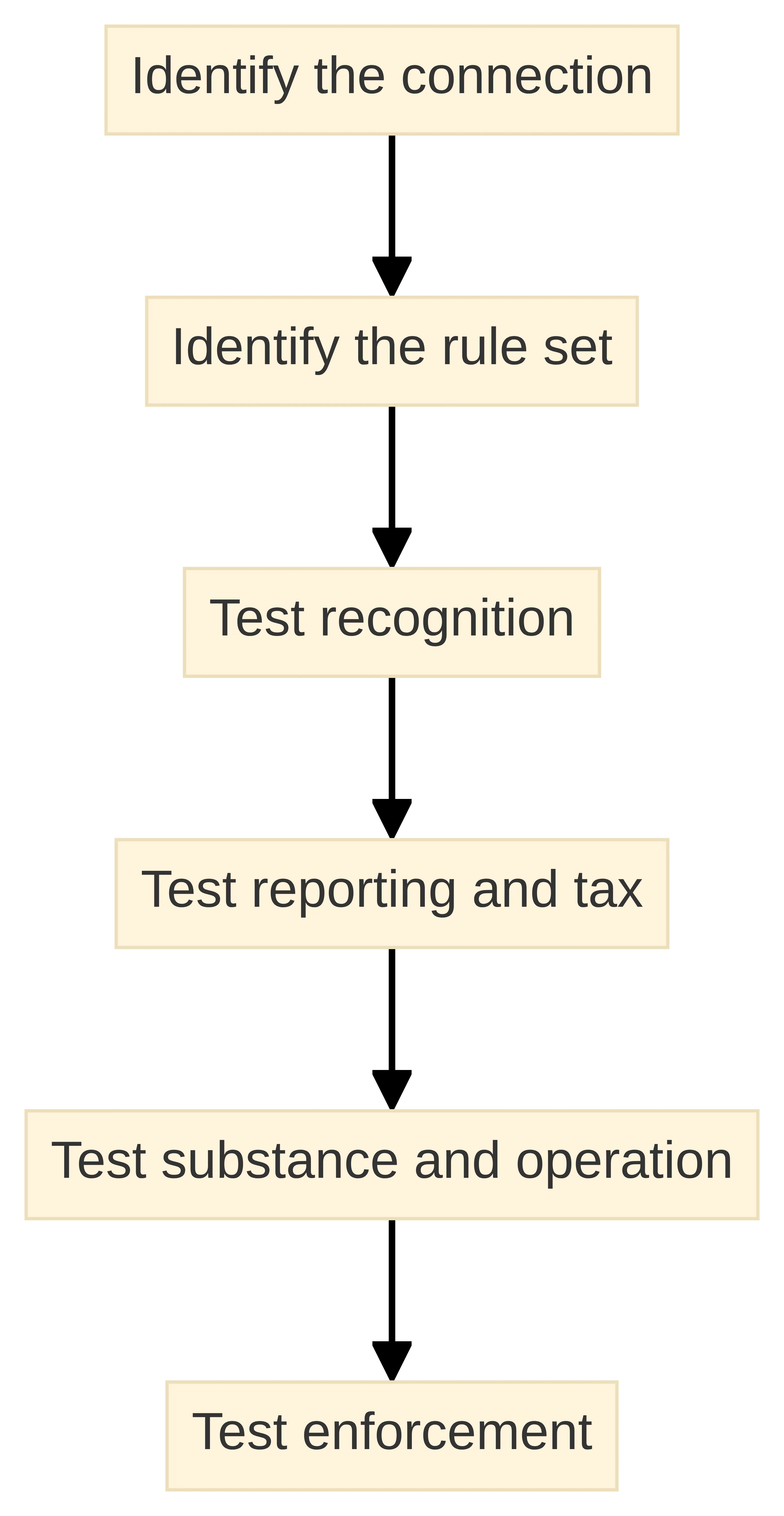
Run the consequence test in this order:
- Identify the connection. List every person, entity, asset, account, business activity, contract, and family relationship that crosses a border.
- Identify the rule set. Ask which jurisdictions may regulate ownership, tax residence, reporting, fiduciary duties, corporate activity, and enforcement.
- Test recognition. Determine whether each jurisdiction recognizes the proposed entity, trust, ownership arrangement, or fiduciary role.
- Test reporting and tax. Determine what must be reported and how the arrangement may be treated for tax purposes.
- Test substance and operation. Identify the management, administration, records, and conduct required for the arrangement to operate as represented.
- Test enforcement. Ask how a claim, judgment, family dispute, or regulatory inquiry could be treated in each relevant jurisdiction.
The action is to obtain jurisdiction-specific review before you transfer assets, change residence, relocate a business, or rely on a foreign layer.
In the United States, asset-protection laws vary by state, including available exemptions, entity protections, and debtor-friendly rules. A U.S. business owner therefore needs to identify the connected state rules rather than treating the country as a single uniform asset-protection regime.
We help businesses expand abroad with corporate structures, tax planning, and compliance with international regulations. We collaborate with lawyers, accountants, tax advisors, bankers, registered agents, realtors, and other professionals worldwide. That coordination does not remove the need to identify which professional is responsible for each legal, tax, banking, fiduciary, or regulatory question.
Put the cross-border questions in a responsibility map. For each issue, record the relevant jurisdiction, the professional responsible for the answer, the filing or administrative obligation, and the event that would require the answer to be revisited. This keeps a foreign entity, trust, account, or ownership layer from being assessed in isolation.
Treat timing, conduct, and later changes as part of the protection decision
Timing is part of the analysis. Asset protection planning is most effective when approached proactively and in layers before a claim arises. That does not authorize you to move assets after a dispute begins or to treat a late transfer as automatically protective. If a claim, debt, guarantee, transaction, or other liability already exists, disclose it in full before any planning action.
Conduct remains part of the structure. Cross-border arrangements also require attention to recognition, reporting, taxation, substance, and enforceability. A structure should therefore be reviewed together with the behavior, records, accounts, and professional responsibilities that support it.
Revisit the plan after a major change, including:
- Relocation or a change in tax residence or domicile.
- Marriage, divorce, or a change in family circumstances.
- A business sale, new venture, major acquisition, or new guarantee.
- A material change in beneficiaries, control, or succession planning.
- A change in the location of an asset, business activity, or account.
The review should reassess risks, ownership and control, liabilities, family and succession factors, cross-border treatment, and whether the selected tools still match the risk profile.
Use timing and conduct as decision gates. If the proposed action depends on hiding an asset, ignoring a known claim, commingling funds, misrepresenting ownership, or bypassing a reporting obligation, do not proceed. Lawful planning requires transparent facts, appropriate records, and review under the rules that apply.
Audit the consultant before accepting the proposed structure
Evaluate the service before you evaluate its preferred structure. A useful review should connect your exposures to the proposed tools, identify the jurisdictions involved, explain who is responsible for each part, and address recognition, reporting, taxation, substance, and enforceability. It should also state what the structure does not address.
An evaluation can be more useful when it produces a visible chain from exposure to layer to operating obligation. The exposure list should distinguish personal, professional, contractual, family, property, tax, and digital risks, along with lawsuits, creditor claims, political risk, and financial instability where they are relevant. It should identify whether the concern involves an operating business, a property, an investment, a family relationship, a residence, a bank account, or a cross-border activity. This prevents a general concern about wealth from being treated as a defined legal conclusion.
The ownership map should show each asset, the current owner, the person or entity with practical control, the intended beneficiary or user, and the liability that the proposed layer is meant to address. Those facts affect the significance of any proposed transfer or segregation. The map should not imply that adding an entity or trust automatically changes the result; it should make the proposed ownership relationship available for jurisdiction-specific review.
For every proposed tool, the explanation should identify its purpose and its boundary. A business entity may be considered in relation to operating liabilities and personal assets. Asset segregation may be considered for a particular property, venture, or pool of wealth. A trust may be considered for the purpose described by its governing structure and applicable law. Insurance may address specified risks, while diversification addresses market exposure. A provider should explain which question each tool addresses and which questions remain open, rather than presenting several tools as one undifferentiated solution.
Cross-border proposals need a jurisdiction map, not only a list of countries. The map should connect each person, entity, asset, account, business activity, contract, and family relationship to the rules that may apply. The review should address whether the proposed arrangement is recognized, reportable, taxable, and enforceable in each relevant jurisdiction. It should also identify questions about corporate law, tax compliance, substance requirements, fiduciary mechanisms, banking, and reporting. For a U.S. owner, state-level differences in exemptions and entity protections remain part of the analysis.
The operating plan should state what must be maintained after implementation. Relevant controls may include separate business and personal accounts, entity formalities, detailed records, appropriate business insurance, ownership records, contracts, invoices, resolutions, and financial records. The proposal should identify who is responsible for legal, tax, investment, fiduciary, banking, and compliance questions. It should also describe what information or event would require a new review, such as relocation, a change in tax residence, marriage, divorce, a business sale, a major acquisition, a new guarantee, or a change in beneficiaries or control.
The provider should make the trade-offs visible. The review can identify effects on access, control, reporting, liquidity, succession, administration, and flexibility without treating any one structure as universally suitable. It should explain the consequences of poor maintenance or a mismatch between the proposed layer and the exposure, and state what remains outside the arrangement. This gives the reader criteria for comparing a service without turning the article into a determination of suitability.
Because the article is general education, a service proposal should identify which conclusions still require individualized legal, tax, investment, fiduciary, banking, or other professional analysis. It should not treat a general description of a trust, LLC, insurance policy, or foreign jurisdiction as a conclusion about the reader’s facts. The provider should identify assumptions that could change the analysis and distinguish a review request from confirmed advice, payment, an appointment, or implementation. That distinction lets the reader assess the service on the information it supplies without treating a service description as a particular result.
Ask the provider questions that force a fact-based answer:
- Which specific exposure is each proposed layer intended to address?
- Which assets, liabilities, ownership interests, and controls were considered?
- What assumptions about your residence, business activity, family, tax status, and existing claims affect the analysis?
- Which jurisdiction’s law governs each entity, trust, account, or ownership relationship?
- Is the proposed arrangement recognized, reportable, taxable, and enforceable in every relevant jurisdiction?
- Which professional is responsible for legal, tax, investment, fiduciary, banking, and compliance advice?
- What records, accounts, formalities, insurance, and ongoing administration will be required?
- What would make the arrangement unsuitable, ineffective for its stated purpose, or too burdensome to maintain?
- What events require a new review?
A provider that cannot answer these questions clearly has not given you enough information to assess the structure.
Those services describe the areas we work in; they do not determine whether a particular arrangement fits your circumstances. Ask for the proposed role, responsibilities, assumptions, and review points in writing. Keep the decision tied to your documented exposure rather than to a structure’s label or a headline promise.
Separate a structure’s description from the conditions required to maintain it. The provider should be able to explain the ownership map, operating controls, reporting obligations, responsible professionals, and circumstances that could change the analysis. Treat a broad promise without those conditions as a reason to request a narrower explanation before you authorize implementation.
Prepare the facts needed for a coordinated review
Prepare a concise fact file before you request a review. Include your U.S. Add the decisions you are considering and the constraints that matter, such as access, control, reporting, liquidity, or future relocation.
Use that file to ask for a coordinated review of four things:
- The exposures that matter most to you.
- The layer or combination of layers proposed for each exposure.
- The controls, filings, administration, and conduct required to maintain the intended separation.
- The legal, tax, investment, fiduciary, banking, and family consequences that may follow.
This article gives you a framework for organizing those questions, not individualized legal, tax, investment, or other professional advice. A qualified professional must decide suitability for your facts and the jurisdictions involved.
A complete fact file gives any qualified professional a defined starting point: the exposure, the assets and liabilities involved, the jurisdictions connected to them, and the controls you can maintain. Keep the decision focused on lawful risk management, with each proposed layer tied to a stated purpose and its material limitations.
What should I ask before requesting an asset protection review?
What are the main categories of asset protection solutions?
Asset protection solutions can include legal ownership and entity planning, insurance coverage, tax reduction strategies, privacy planning, and investment diversification. Each category addresses different types of exposure and should not be substituted for one another.
How can I assess the risks that asset protection planning may address?
To assess risks, identify potential exposures such as lawsuits, creditor claims, divorce, family wealth transfer, and political or financial instability. A thorough review should map these risks before selecting any protective structure.
What is the role of an asset protection trust?
An asset protection trust is an irrevocable trust designed to make assets less accessible to potential creditors or claimants. Its effectiveness depends on the governing structure and applicable law.
What factors should I consider when evaluating an asset protection consultant?
When evaluating a consultant, consider their ability to connect your exposures to proposed tools, clarify jurisdictional responsibilities, and provide a detailed explanation of the structure’s intended purpose and limitations.
How does an LLC provide asset protection?
An LLC generally separates business liabilities from an owner’s personal assets, providing a layer of protection. However, this protection is not absolute and depends on maintaining proper business practices and separating personal and business funds.
What are the limitations of relying solely on insurance for asset protection?
Insurance is a component of broader risk management and does not provide the same legal protections as ownership structures. It should be reviewed separately to identify covered events and remaining exposures.
How can I ensure that my asset protection planning remains effective over time?
Regularly review your asset protection plan after major life changes, such as relocation, marriage, or business changes, to reassess risks, ownership structures, and compliance with applicable laws.
Ask the team
Have a question about your own situation?
Tell us where you pay tax today and what you want to achieve. We will review your case and get back to you within 1 business day.