
How to Evaluate Asset Protection Solutions Across Borders
Start with the jurisdiction matrix
Cross-border asset protection is easier to compare as a jurisdiction matrix than as a catalogue of structures. Begin with the jurisdictions connected to ownership, control, residence, assets, income, creditors, family rights, or enforcement. Then examine the same questions in each jurisdiction instead of assuming that one structure has one global effect.
The matrix should have five core columns:
- Recognition: whether the relevant jurisdiction recognizes the entity, trust, ownership arrangement, or legal relationship for the purpose being considered.
- Reporting: whether the arrangement, transfer, account, asset, or income must be disclosed.
- Taxation: how the jurisdiction treats the entity, trust, transfer, income, distribution, gain, or expense.
- Enforcement: which rules govern the asset, owner, creditor, and remedy if a dispute arises.
- Practical control: who can administer the arrangement when the parties or assets sit in different countries.
Use this sequence:
- Define the exposure and the assets that could be reached.
- List every jurisdiction connected to that exposure.
- Complete the five columns for each proposed arrangement.
- Record missing facts, unresolved obligations, and conditions that could change the result.
- Compare tools and provider responsibilities only after the jurisdiction rows are clear.
This method does not turn a cross-border arrangement into a guarantee against lawsuits, creditors, taxation, political risk, or financial loss. It creates a consistent way to identify which questions must be answered before a proposed solution is pursued.
Define the protection problem before naming a solution
Asset protection addresses legal and financial exposure around wealth; it does not replace every other form of planning. Common tools include insurance, trusts, limited liability companies, prenuptial agreements, and other legal structures, but their effects depend on the facts and governing law.
Start by separating the objective from neighboring objectives:
- Asset protection: examine how ownership, control, liability, and legal claims may affect particular assets.
- Tax reduction: examine how transactions, entities, income, residence, and jurisdictions are taxed and reported. A lower tax result does not by itself establish protection from a creditor or lawsuit.
- Insurance: transfer part of a defined risk to an insurer under a policy with limits, exclusions, and conditions. Insurance can add a financial buffer and legal defense, but it may not cover every exposure.
- Investment management: decide how capital is allocated, held, and managed for an investment objective. An investment choice should not be treated as a liability structure merely because an asset is located in another country.
- Ordinary business risk management: reduce operational disruption through contracts, controls, staffing, cybersecurity, continuity planning, and other business practices. Those measures can matter to your risk profile, but they do not answer every ownership or creditor question.
A defined problem gives you a way to reject vague promises. Write down whether your concern is a claim against the operating business, a claim against you personally, a property-related liability, a contractual dispute, a family or succession issue, political or financial instability, or a cross-border enforcement problem. A risk review can consider creditor, litigation, divorce, business, political, succession, and enforcement risks.
Then identify the result you actually need to examine. You may be trying to keep an operating asset separate from personal wealth, preserve access to investment capital, coordinate family ownership, or reduce the chance that a dispute reaches unrelated assets. Each objective creates different questions about control, liquidity, cost, compliance, and timing. Do not accept a structure until its proposed function is stated in those terms.
Map each exposure to the jurisdictions involved
Map each exposure to the jurisdictions involved before comparing tools. Create one row for each event or obligation and attach the facts that determine which jurisdictions belong in the review.
Record five items for every row:
- Trigger: the event being tested, such as a lawsuit, contract dispute, business downturn, personal guarantee, divorce, political change, or succession event.
- Potential claimant path: the person or entity that could face the claim and the relationship connecting the claim to the wealth.
- Asset connection: the assets that could be relevant and where they are held or used.
- Ownership and control: the formal owner and the person or entity able to direct, use, or benefit from the asset.
- Jurisdiction set: the locations whose recognition, reporting, taxation, enforcement, or family and creditor rules may need review.
A contractual dispute can create substantial liability exposure, and shareholder, partner, or member disputes can sometimes create personal exposure for business owners. Insurance may provide some protection, but policy terms do not answer every liability question.
The result is not a general risk label. It is a set of jurisdiction-specific rows showing which facts must be checked. If a proposed arrangement cannot be connected to a defined exposure, asset, owner, and jurisdiction set, keep it out of the comparison until those facts are identified.
Compare ownership and control by jurisdiction
Compare ownership and practical control within each jurisdiction row. Formal title, the person who directs an asset, the person who receives its income, and the person who uses it can create different questions for recognition, reporting, taxation, and enforcement.
An LLC may generally separate an asset’s liabilities from your personal wealth, but that protection can weaken if the entity is not properly maintained. In the comparison, record the asset, formal owner, controlling person or entity, cash-flow recipient, and relevant governing jurisdictions rather than treating the entity name as the conclusion.
Use the same comparison for:
- operating assets and higher-risk assets;
- personal wealth and business obligations;
- legal ownership and practical control; and
- family wealth, beneficiaries, and succession rights.
Family and succession factors can include matrimonial property, forced-heirship concerns, and family governance in the relevant jurisdictions. A separation that appears clear in one jurisdiction may still raise reporting, tax, recognition, or enforcement questions elsewhere.
The purpose is not to move assets out of sight. Any proposed arrangement must remain lawful and consistent with existing obligations. Record the ownership boundary and the jurisdictional questions it creates before treating the boundary as relevant to the exposure.
Compare tools only after the jurisdiction screen
Compare a tool only after placing it in the jurisdiction matrix. The question is not whether a structure has a familiar name; it is which function it is intended to serve and how each relevant jurisdiction treats that function.
Insurance: Insurance can add a financial buffer and legal defense, but policy limits and exclusions mean it may not cover every exposure. In the matrix, record the covered event, limit, deductible, exclusions, defense provisions, insured parties, territory, renewal terms, and claims process.
Entities: An LLC may generally separate an asset’s liabilities from personal wealth. Record the asset connected to the entity, the maintenance requirements, and the jurisdictions that may assess the entity, its income, its filings, or its liabilities.
Trusts: Traditional self-settled trusts, in which you place assets into a trust for your own benefit, generally do not protect those assets from creditors. Some U.S. states authorize domestic asset-protection trusts subject to local limitations. The matrix should therefore identify the governing law, the relevant control questions, and the limits described for that arrangement.
Combined arrangements: A plan may combine insurance, asset titling, entities, and trusts rather than relying on one tool. For each component, state its intended exposure, the condition supporting that intended effect, the ongoing administration required, and the jurisdictional questions still open.
A component that adds paperwork without changing the relevant exposure should not be treated as a completed answer. Keep it in the comparison until its function, conditions, and jurisdiction-specific consequences are clear.
Place timing and creditor rights on the matrix
Place timing beside the jurisdiction rows rather than treating it as a final footnote. Asset-protection planning is generally more effective when started proactively, before a claim arises.
For each proposed transfer or change, record:
- when the relevant obligation, guarantee, transfer, or business event began;
- whether an asset is already pledged, disputed, or connected to a creditor relationship;
- which jurisdictions govern the asset, owner, transfer, creditor, or remedy; and
- whether a planned sale, relocation, marriage, divorce, acquisition, or change in tax residence could alter the review.
Transfers made to defeat creditors may be challenged or nullified under applicable fraudulent-transfer rules, and attempts to convert assets into exempt assets may be restricted by fraudulent-conversion rules. Those timing and creditor questions belong in the comparison before a structure is treated as available for legitimate planning.
If the timeline shows a present dispute or known liability, stop the general comparison and obtain the jurisdiction-specific review required for that situation. Timing does not cure an unlawful purpose or erase an existing obligation.
Stress-test administration, not just formation
Administration determines whether an intended ownership boundary continues to operate after formation. An LLC’s protective effect can weaken if separate accounts, required tax returns, or corporate formalities are not maintained.
Ask for an operating schedule, not only an organization chart. The schedule should identify:
- Who opens and controls each account.
- Which entity receives income and pays expenses.
- Which records must be maintained and where they are stored.
- Which tax, regulatory, corporate, trust, or reporting filings are required.
- Who monitors deadlines and what happens when ownership, residence, family, or business facts change.
Administration also tests practicality. If the structure requires decisions from several countries, separate records, recurring filings, local agents, or professional coordination, record the burden before choosing it. A structure that you cannot operate consistently is not strengthened by its formation documents.
Use an ownership-and-obligations register with one line for every entity, account, asset, guarantee, filing, and responsible person. Update it after a major acquisition, business sale, relocation, marriage, divorce, or tax-residence change. That register is a practical aid for organizing facts; it does not establish that a structure is legally effective.
Complete the recognition and enforcement matrix
Complete the matrix one jurisdiction at a time. For every jurisdiction connected to ownership, control, residence, assets, income, creditors, family rights, or enforcement, answer the same five questions:
- Recognition: does the jurisdiction recognize the entity, trust, ownership arrangement, or legal relationship for the purpose being considered?
- Reporting: must you, an entity, trustee, financial institution, or other person disclose the arrangement, transfer, account, asset, or income?
- Taxation: how does the jurisdiction classify the entity, trust, transfer, income, distribution, gain, or expense?
- Enforcement: if a dispute reaches a court or authority, which rules govern the asset, owner, creditor, and remedy?
- Practical control: who can administer the arrangement when relevant parties and assets sit in different countries?
Do not replace these separate answers with a single conclusion that a structure is valid. A residence permit or second citizenship may change mobility options, but it does not by itself answer the recognition, tax, reporting, or enforcement questions for an asset-protection arrangement.
One Percent Tax states that it helps investors in equity, real estate, crypto, and portfolios protect wealth, pursue second residency or citizenship, and optimize taxes across borders. Eligibility, jurisdictions, costs, reporting, and outcomes are not established by that service description and require a separate factual review.
Write the jurisdiction map before selecting a foreign structure. Include citizenship, tax residence, domicile where relevant, business locations, asset locations, family connections, creditor locations, and any proposed destination. Rules are subject to change, so each row must be checked against the circumstances that exist when you act.
Treat citizenship, tax residence, domicile, and destination as separate facts in the review rather than as interchangeable labels. For each one, note the question it is meant to answer: mobility, tax status, ownership or enforcement connection, or another defined planning purpose. Then test whether the proposed arrangement changes the relevant row for the asset, owner, income, creditor, or remedy. This prevents a new residence or citizenship from being treated as a substitute for checking how the structure is recognized, reported, taxed, or enforced. Also distinguish a change in personal status from a change in the asset connection. Ask whether the proposed move changes the owner, asset location, income source, creditor location, or enforcement connection; if it does, record the before-and-after facts and the new questions they create. If it does not, mobility alone is not evidence that the asset-protection issue has been resolved.
Check U.S. reporting before pursuing foreign structures
U.S. reporting should be part of the initial screen when you are a U.S. person or retain U.S. connections. Depending on the facts, U.S. persons connected with foreign trusts may have reporting obligations including Forms 3520, 3520-A, 8938, or FinCEN Form 114.
Federal reporting requirements for foreign assets and foreign gifts generally apply to U.S. persons, including U.S. citizens regardless of residence and U.S. resident aliens. Special rules may apply to U.S. territories and possessions.
Use a reporting screen before you treat a foreign trust, account, entity, gift, or transfer as an asset-protection option:
- Identify your U.S. status and any other status that affects reporting.
- List foreign accounts, trusts, entities, gifts, distributions, and financial assets connected with the proposal.
- Record who owns, controls, contributes to, or receives value from each arrangement.
- Ask which forms, deadlines, records, and supporting documents may apply.
- Separate reporting from taxation: a filing requirement does not by itself determine the tax result, and a tax result does not eliminate a reporting obligation.
The screen is not a substitute for a filing determination. Its purpose is to prevent reporting from appearing only after the structure has been selected. Include the question in the initial review brief, along with the jurisdictions and dates relevant to the proposed transaction.
Record limitations before comparing options
Read across the jurisdiction matrix for limitations before comparing arrangements. Asset protection is not a promise that creditors, lawsuits, taxation, political risk, or financial loss cannot affect you.
For each proposed arrangement, mark the unresolved condition in the relevant row or column:
- Coverage: insurance limits and exclusions may leave part of an exposure outside the policy.
- Concentration: relying on one strategy can leave gaps, while a plan may combine insurance, titling, entities, and trusts.
- Maintenance: an entity or trust may require records, separate accounts, filings, formalities, or continuing administration.
- Cross-border treatment: recognition, reporting, taxation, and enforcement may differ among the jurisdictions connected with the arrangement.
- Control: practical control or personal benefit can affect how the arrangement is evaluated under the relevant law.
- Timing and creditors: an existing obligation or claim can change whether a proposed transfer can be considered for legitimate planning.
An unresolved cell is a reason to obtain the relevant jurisdiction-specific review, not a reason to fill the gap with an assumption. Compare proposals by the conditions they disclose and the questions they leave open, rather than by the label attached to the structure.
Evaluate whether the provider can answer the matrix
Evaluate a provider by whether it can explain the jurisdiction matrix and assign responsibility for each unresolved question. A useful proposal connects the exposure, assets, jurisdictions, tools, conditions, administration, reporting questions, limitations, and review points to the facts supplied.
Ask:
- Which exposure and asset does each component address?
- Which person or entity owns each asset, and who controls it in practice?
- Which jurisdiction must answer each recognition, reporting, taxation, or enforcement question?
- Which legal, tax, regulatory, immigration, accounting, or administrative issue remains open?
- Who is responsible for each conclusion, filing, document, account, deadline, and later review?
- What facts would make the proposal unsuitable, unavailable, taxable, reportable, or difficult to enforce?
- What changes would require the rows to be reviewed again after relocation, an acquisition, a business sale, marriage, divorce, a change in tax residence, or a claim?
One Percent Tax states that it collaborates with lawyers, accountants, tax advisers, bankers, registered agents, realtors, and other professionals worldwide. That collaboration claim identifies a potential coordination model; it does not establish that a particular professional, jurisdiction, service, or outcome applies to your situation.
One Percent Tax also states that its Global Wealth Protection Service builds legal structures to safeguard wealth against risks, creditors, and uncertainty. Convert that service description into a written scope identifying the assets considered, exposures reviewed, jurisdictions involved, information required, work performed by each professional, and decisions that remain outside the engagement.
A review request is ready for consideration when its facts, jurisdiction rows, open questions, and responsibilities are visible. Anything not answered remains a question for the relevant professional or jurisdiction-specific review.
Prepare a fact-based review request
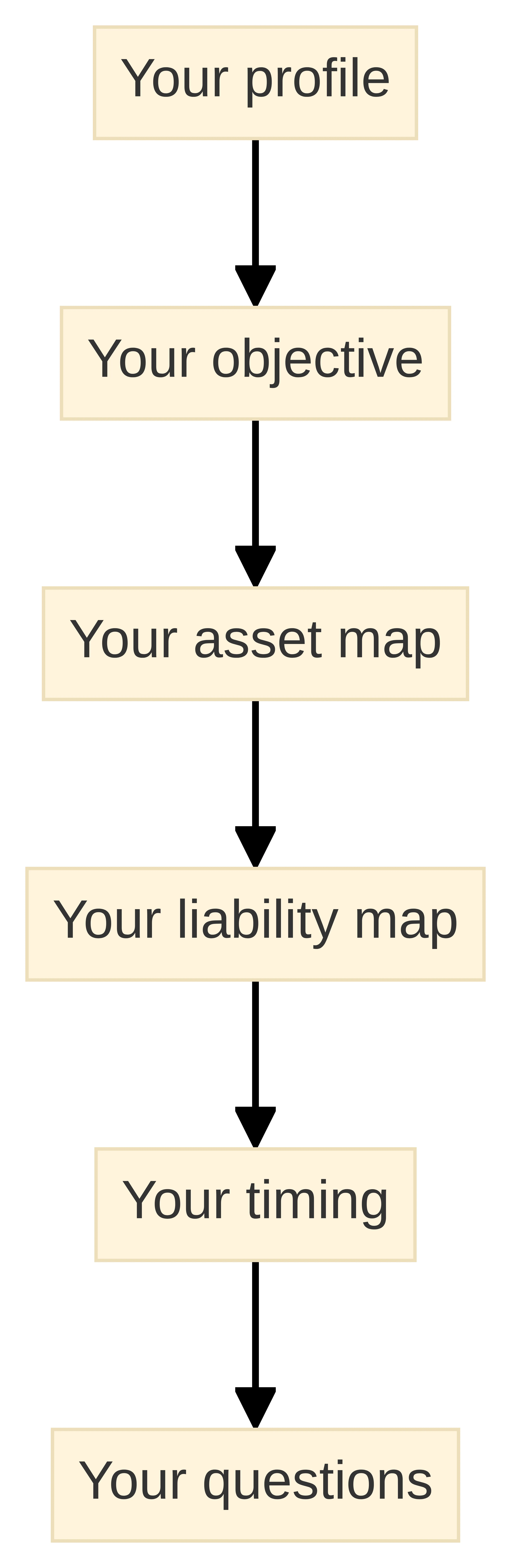
A situation-review request should give the reviewing team enough context to test exposure, ownership, timing, cross-border treatment, and responsibility without asking a slogan to do the work. A planning process can map ownership, review liabilities and family factors, assess cross-border treatment, select tools, and revisit the plan after major changes.
Prepare the request in six parts:
- Your profile: citizenship, current tax residence, relevant domicile, family situation, business role, and countries connected with your affairs.
- Your objective: describe whether you are examining lawsuit exposure, political or financial instability, asset segregation, succession, a second residence or citizenship, cross-border tax planning, or another defined concern.
- Your asset map: list operating businesses, real estate, equity, crypto, portfolios, cash, trusts, entities, accounts, and material ownership or control arrangements.
-
- Your timing: identify proposed acquisitions, sales, transfers, relocation, changes in tax residence, family events, business transactions, and any current or anticipated claim.
- Your questions: ask which tools address which exposure, which jurisdictions must be assessed, what reporting may apply, who performs each task, what administration is required, and what conditions could defeat the intended result.
The service description identifies investor categories for its assistance, but it does not by itself establish eligibility or predict an outcome.
Do not send more sensitive information than the initial review requires. State what you are trying to decide, identify the facts that affect that decision, and ask for the missing jurisdictional and professional questions to be identified before you discuss implementation.
Choose the next review with clear boundaries
A cross-border stress test can use a jurisdiction-by-jurisdiction record: assess whether each relevant jurisdiction recognizes the proposed structure, requires reporting for it, taxes it, and will enforce it, then identify which unanswered questions need coordination with relevant professionals. The decision is not whether a structure sounds protective; it is whether the proposed arrangement addresses your stated risk under the conditions that apply to you.
Planning is generally more effective when started before a claim arises, but timing does not override creditor rights or make a transfer lawful.
We provide a Global Wealth Protection Service that builds legal structures to safeguard wealth against risks, creditors, and uncertainty.
Your situation-review request can state your tax residence, goal, relevant assets and liabilities, timing, jurisdictions, and questions; sending it to the One Percent Tax team does not confirm an appointment, payment, or advice.
What should be prepared before requesting an asset protection review?
What are common asset protection strategies?
Common strategies include insurance, trusts, limited liability companies (LLCs), prenuptial agreements, and other legal structures that help limit exposure to financial risks.
How does timing affect asset protection planning?
Planning is generally more effective when initiated before a lawsuit or claim arises, as it allows for proactive measures to safeguard assets.
What should I consider when evaluating an asset protection provider?
Consider the provider’s understanding of your specific exposure, the tools they propose, their experience with cross-border issues, and their ability to maintain compliance with relevant laws.
What are the reporting obligations for U.S. persons with foreign trusts?
U.S. persons may have reporting obligations related to foreign trusts, including Forms 3520, 3520-A, and 8938, depending on their involvement with the trust.
How can I prepare for a situation review regarding asset protection?
Prepare by mapping your assets and liabilities, defining your objectives, and outlining any relevant timing or jurisdictional factors that may affect your asset protection strategy.
Ask the team
Have a question about your own situation?
Tell us where you pay tax today and what you want to achieve. We will review your case and get back to you within 1 business day.