
Global Tax Reduction Planning: A Decision Guide for Entrepreneurs Relocating Internationally
Is your international move ready for a professional tax review?
An international move deserves a professional tax review before you choose a country, change an entity, or alter how you operate your business. Relocation is a proposed change, not the tax result itself. The useful question is whether the proposed move fits your personal position, business activity, income, assets, and every jurisdiction connected to them.
Global tax strategies may be tailored to operations, structures, and financing while taking U.S. and cross-border taxation into consideration. Here, that description identifies subjects for examination; it does not establish a tax rate, savings amount, or eligibility result for you.
Use this readiness screen before comparing destinations:
- You can describe where you live now, where you may move, and when the change may occur.
- You can separate your personal move from any proposed change to the business.
- You can list the income sources, assets, entities, owners, and jurisdictions that may be affected.
- You are prepared to examine continuing U.S. obligations alongside host-country rules.
- You are willing to test the proposal under specific treaty and compliance conditions rather than relying on a headline rate.
If several of these facts are still unknown, gather them before selecting a structure. A planning review is more useful when it tests a defined proposal instead of a general wish to pay less tax.
Start with the tax connections relocation may not remove
Foreign residence may affect the bona fide residence test, treaty tie-breakers for eligible dual residents, and host-country exposure, but it does not end U.S. citizenship-based filing by itself. For you, that means the first review question is not simply where you will sleep or hold a permit. It is which U.S. and foreign tax connections continue after the proposed move.
Start the analysis with a written fact list:
- Your U.S. citizenship, tax status, and present filing position.
- The proposed departure, arrival, and return pattern.
- Your personal and financial connections to the United States and the prospective country.
- The location and source of compensation, business income, investment income, and other receipts.
- The entities you own, control, or may form in another country.
- The filings and reporting positions that may continue during the transition.
These are review inputs, not conclusions. Foreign residence can change some parts of the analysis while leaving other U.S. connections in place.
A proposed controlled-foreign-corporation structure may require a U.S. shareholder to account for global intangible low-taxed income under U.S. rules. If your proposed structure involves a controlled foreign corporation, test this inclusion before treating foreign incorporation or retained earnings as a deferred U.S. tax result.
Certain income referred to as Subpart F income is taxed currently to a U.S. shareholder rather than only when foreign-corporation income is distributed. Subpart F provisions also require a U.S. shareholder to include its pro-rata share of a controlled foreign corporation’s foreign personal holding company income currently; that income generally includes dividends, interest, annuities, rents, royalties, and net gains on dispositions of property producing those types of income. The practical boundary is clear: do not treat a foreign company, foreign bank account, or undistributed income as an answer until the applicable U.S. rules have been tested.
Separate permission to live somewhere from tax residency
A residence permit and tax residency answer different questions. A permit concerns permission to live in a country under that country’s immigration system; tax residency concerns the tax rules that may apply to you. Holding one does not, by itself, settle the other.
Tax residency is determined by factors such as how long you spend in a country, where your primary residence is, and where you have significant personal or financial ties. Build your analysis around those facts rather than the label attached to a permit. Record travel days, homes, family connections, work location, business activity, and financial ties for each relevant country.
Global entrepreneurs can hold multiple residence permits while maintaining a single, tax-friendly residency, but the result depends on the applicable rules. Every country has different rules for tax residency and residence permits. If you are considering several destinations, compare the residence rules and tax-residency rules separately, then examine how they interact with your U.S. position. Do not use a residence permit as a substitute for a tax-residency analysis.
Run a pre-move residency-and-treaty screen
Overlapping residency positions need to be resolved before you choose a destination. Accidentally becoming a tax resident in multiple countries could result in double taxation. That possibility makes your travel pattern, primary residence, personal ties, and financial ties decision factors rather than administrative details.
A tax treaty can change source, withholding, pension, or residence outcomes, but the result depends on the specific treaty article and the treaty’s saving clause. A treaty name is therefore not enough. Identify the exact article that may apply, the facts required by that article, and the U.S. rules that may continue alongside it.
Under U.S. tax law, you may be treated as a U.S. resident for at least part of the year of arrival through the First-Year Choice, elect with a U.S. citizen or resident spouse to be treated as a U.S. resident, claim a closer connection to a foreign country, or qualify as a foreign-country resident under treaty tie-breaker rules. Each possibility has conditions. Treat these as positions to analyze, not options to select from a menu without examining your facts.
Before comparing countries, ask:
- Which country’s domestic rules could treat you as a resident?
- Does the proposed travel and home pattern support the position you expect to take?
- Does a treaty apply to your facts, and which article matters?
- Could the treaty’s saving clause preserve a U.S. tax result?
- What filing or disclosure follows from the position?
The screen produces a record of the unresolved residency, treaty, and filing questions. Take that record into a professional planning review; its conclusions depend on the relevant facts and applicable rules.
Use the screen as a sequence rather than as a destination-ranking exercise. First establish the personal facts: present status, proposed travel, homes, and relevant ties. Next separate each country’s domestic residency rules from any treaty analysis, including the article and saving clause that may matter. Then map the business independently, including ownership, management, contracts, activity, assets, and income sources. Finally, list the returns, information reports, account disclosures, and departure-related questions that may follow from the proposed position. This order keeps a preferred destination, permit, or entity from becoming the starting assumption. It also gives the reviewer a traceable path from a fact, to a legal question, to a possible filing or implementation consequence.
Treat the business as a separate cross-border tax question
Your relocation and your company’s position are separate cross-border tax questions. Moving the owner does not, by itself, explain how an entity is taxed, where its activity is analyzed, or how its income is reported. Map the business independently before changing ownership, management, banking, or operations.
If your business uses a foreign corporation, determine whether you are a U.S. shareholder of a controlled foreign corporation and assess its U.S. tax treatment. Certain Subpart F income is taxed currently rather than only when the foreign-corporation income is distributed. The entity chart should therefore show ownership, control, income categories, and the timing of inclusions.
International tax attorneys may advise U.S. clients operating internationally on income deferrals, controlled-foreign-corporation and foreign-passive-investment-company rules, foreign tax credits, and transfer-pricing arrangements. Put those subjects into separate questions instead of treating the company as a single tax object. Identify who performs the work, where decisions are made, which entities contract with customers, and how related parties transact.
Cross-border tax planning services can address whether inbound investments or operations create a permanent establishment or the conduct of a U.S. trade or business, and whether U.S.-source investment income is subject to U.S. withholding taxes. If your move changes where people, management, customers, assets, or contracts are located, add those questions to the business review. Do not assume that the owner’s new residence determines the company’s full tax position.
Make that separation operational with an interface map. For each proposed change, record what changes for the owner, what changes for the entity, which income or assets move or remain connected to an existing jurisdiction, and which new jurisdiction questions are triggered. Link each entry to the supporting record, such as an ownership chart, contract, operating description, account record, or travel history. If the owner moves while customers, contracts, management, property, or business activity remain connected to the United States, treat the resulting company questions as open items rather than inferring an outcome. The same discipline applies when the entity changes but the owner’s residence, investments, or reporting position does not. This map helps prevent a personal relocation decision from silently becoming an unreviewed business restructuring.
Identify which planning areas are relevant to the facts
Foreign tax credits may belong in the analysis when you have eligible foreign income taxes. Eligible foreign income taxes can reduce U.S. income tax on the same foreign-source income under the Foreign Tax Credit, subject to the separate-category limitation. That premise does not establish that a credit is available for your income or that it will eliminate a U.S. liability. Classify the income and test the limitation.
Timing can change the usefulness of a credit. Matching when income is recognized with when foreign tax is paid or accrued can affect the Form 1116 limitation and whether a credit is usable in the current year. Add recognition dates, payment dates, and the relevant income category to your fact file before estimating a result.
Treaty analysis may affect source, withholding, pension, or residence outcomes, but a treaty result depends on the specific treaty article and its saving clause. Ask which article is relevant, which facts activate it, and what U.S. filing position accompanies it. Do not treat treaty access as a universal planning lever.
Other planning areas may include:
- Entity structuring and the way assets or ownership interests are titled. Note which person or entity owns each material asset and which proposed change would affect that position.
- Income-tax planning, including the timing of recognition and the treatment of deductions or credits. Keep income categories separate rather than assuming one treatment applies to every receipt.
- Cross-border wealth transfer, gift, inheritance, and succession questions. Record the people, entities, and jurisdictions connected to a proposed transfer.
- Expatriation-tax considerations, including possible exit taxes. Treat a departure event as a separate question from ordinary annual filing.
- Foreign-account reporting, such as FBAR and FATCA. List the relevant accounts and the person or entity connected to each one.
- Retirement savings, pensions, and investment treatment. Identify the account, payer, owner, and country involved.
- Operations, structures, and financing considered together with U.S. and cross-border taxation. Include the people making decisions, the entities conducting activity, and the jurisdictions connected to the arrangements.
Match each category to a concrete personal, business, income, asset, or jurisdiction fact. These are categories for review, not promises that every category applies to you. The review should identify which areas matter, which do not, and what unresolved question remains in each relevant area.
Test failure costs before comparing jurisdictions
Your failure test should ask what happens if the expected residency position is not accepted, overlaps with another country’s position, or leaves a U.S. obligation in place.
A foreign tax credit is not a general answer to every cross-border tax cost. Test classification and timing before counting a credit in the proposal.
Use these failure questions for every proposed jurisdiction:
- What reporting, residency, exit-tax, or retirement questions remain after implementation?
- What happens if you spend more time in another country than planned?
- What happens if the company keeps U.S. customers, management, assets, or income sources?
- Which assumption depends on a treaty article that has not been tested?
- Which obligation has no identified owner, filing process, or review date?
If the proposal cannot answer those questions, pause the comparison and resolve the missing facts first.
A useful failure review can classify each issue as known, conditional, or unresolved. A known item has a documented fact and a rule or filing question identified for review. A conditional item depends on an event such as a different travel pattern, a change in ownership, a new income category, or a treaty position that has not yet been established. An unresolved item lacks the fact, jurisdiction-specific analysis, or responsible person needed to evaluate it. Compare proposals using the same classifications rather than allowing one proposal to appear stronger simply because its uncertainties are not listed. Give particular attention to dependencies that cross categories: a residency assumption may affect personal filing, a business change may affect entity reporting, and the treatment of an asset may affect income or transfer questions. The purpose is not to predict every result, but to show where the proposal can fail and what must be verified before implementation.
Build the pre-consultation fact set
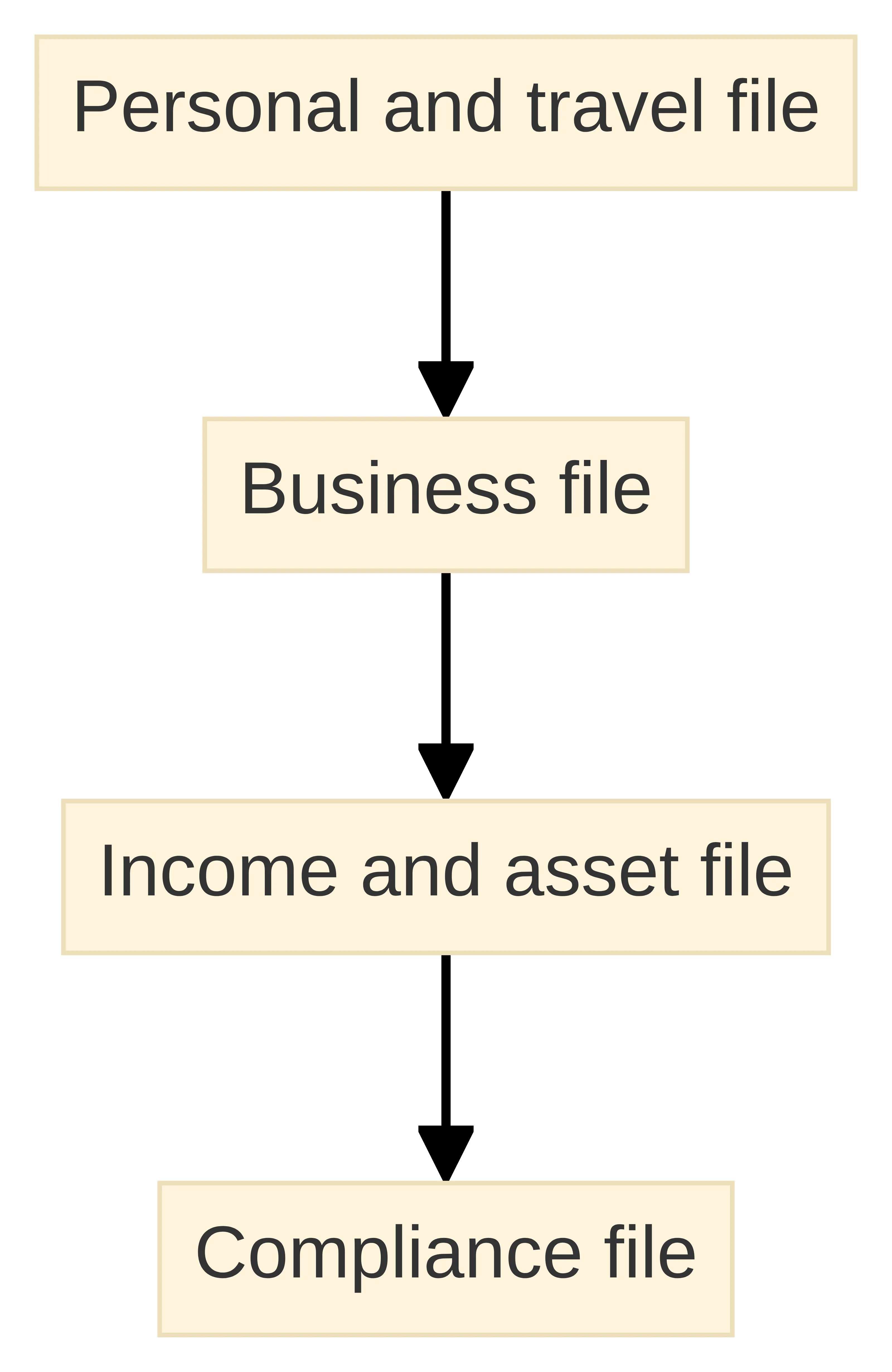
Your business file should include:
- Every entity, its country of formation, ownership, control, and business purpose.
- The people who manage the business and where they perform their work.
- Customers, suppliers, contracts, offices, property, banking, and operating activity by jurisdiction.
- Related-party transactions and any existing or proposed transfer-pricing arrangement.
- Foreign corporations, passive investments, retained income, and the ownership interests that may matter under controlled-foreign-corporation or foreign-passive-investment-company rules.
- Any proposed restructuring, financing, acquisition, sale, or change in management.
For each entity, connect the ownership chart to the activity map. Note who owns or controls it, who performs the work, where decisions are made, which entity contracts with customers, and where money and property are located. If a foreign corporation is involved, mark the ownership and income facts needed to examine GILTI or Subpart F treatment rather than assuming that incorporation abroad changes the U.S. analysis. If a passive investment or retained income is involved, record its category and the person whose interest may be relevant. For related parties, preserve the agreements and transaction terms so transfer-pricing questions can be considered.
Give the reviewer the entity and activity map needed to ask those questions. The map should show what would change under the proposed move and what would remain connected to the United States.
Your income and asset file should identify the source, owner, location, and timing of each material item:
- Compensation, business income, dividends, interest, rents, royalties, gains, pensions, and other receipts.
- Real estate, investment accounts, private-company interests, intellectual property, retirement accounts, and significant personal property.
- Foreign taxes paid or accrued and the income category to which each tax relates.
- Gifts, inheritances, planned transfers, trusts, and succession concerns.
- Recognition dates, payment dates, and records relevant to any Form 1116 analysis.
International tax services may include asset structuring and titling, cross-border wealth-transfer guidance, income-tax planning, and retirement planning. Gather the records that show what you own and when income or tax arises; do not begin with a preferred structure.
Your compliance file should list U.S. and foreign returns, information reports, foreign accounts, prior treaty positions, and correspondence that affects the proposed move. Include FBAR and FATCA questions where foreign accounts are involved, along with any known U.S.-source income or inbound activity. Bring the underlying records so those questions can be tested rather than guessed. Add a transition calendar to the compliance file. Mark the proposed departure and arrival periods, travel days, changes in homes or personal ties, ownership or management changes, income-recognition dates, foreign-tax payment or accrual dates, and the tax years affected. Add the relevant returns, information reports, account disclosures, treaty positions, and departure-tax questions beside the dates or events that may create them. This does not determine which forms or positions apply; it gives the reviewer a way to see when facts change and which questions arise at the same time. Keep planned events separate from completed events, and identify assumptions that may change during the transition. A dated record is also useful when the proposed move involves more than one country or when personal and business changes occur on different schedules.
Use review criteria that can disqualify a proposal
Evaluate a proposed path against the same criteria each time:
- Factual fit: Does the plan match your actual travel, home, family, business, ownership, income, and asset facts?
- Jurisdiction fit: Which domestic rules, treaty articles, saving clauses, and source rules control the result?
- Business fit: Can the proposed entity and operating model function without contradicting how the business actually works?
- Continuing obligations: Which U.S. and foreign filings, reporting duties, residence tests, and tax positions continue after implementation?
- Implementation burden: Who must form, operate, document, report, and monitor each part of the plan?
- Verification: Can each expected result be tested under the rules applicable to the relevant jurisdictions and tax year?
A strategy intended to minimize tax risks and support compliance still has to fit the facts. Global tax strategies may be tailored to operations, structures, and financing while taking U.S. and cross-border taxation into consideration; that does not make every proposed structure suitable for every business.
Treat a proposal as incomplete when it relies on any of these shortcuts:
- A residence permit is presented as proof of tax residency.
- A destination’s general reputation replaces the applicable domestic rules.
- A treaty is named without identifying the article, conditions, and saving clause.
- A foreign entity is expected to avoid U.S. analysis of GILTI or Subpart F income.
- A foreign tax credit is counted without testing the separate-category limitation and timing.
- Compliance duties are described as someone else’s problem.
Each shortcut points to a missing fact or legal question. Resolve it before comparing the proposal with another jurisdiction.
A proposal should advance only when you can state its assumptions, expected tax connections, continuing obligations, implementation steps, and verification points in plain language. If the expected result depends on an untested residence position, an unexamined company connection, or an undefined reporting obligation, keep the proposal in the review stage. A clear boundary is more useful than a confident estimate built on missing facts.
Know when individualized professional review is necessary
International tax attorneys may advise U.S. clients operating internationally on controlled-foreign-corporation and foreign-passive-investment-company rules, foreign tax credits, income deferrals, and transfer-pricing arrangements. Ask for the personal and business analysis to be coordinated rather than reviewing each fact in isolation.
A tax professional specializing in international law can help manage the complexities of tax residency and residence permits. When you request a review, provide the fact set from the previous section and ask for jurisdiction-specific treatment of residency, income source, entities, assets, reporting, treaty positions, and departure-tax questions. Request clear assumptions and conditions for every proposed path. The review should also distinguish documented facts from assumptions, identify the unresolved question attached to each assumption, and explain which conclusion depends on a particular jurisdiction or treaty position. Ask for the personal and business consequences to be addressed separately, including continuing U.S. connections, entity treatment, income and asset questions, reporting, and implementation responsibilities. Where more than one path remains possible, ask that the alternatives be compared using the same factual inputs and criteria rather than by a headline tax objective alone. The useful deliverable is not merely a preferred destination or structure; it is a reasoned record of what must be true, what must be completed, what must be reported, and what should be revisited if travel, ownership, operations, income, assets, or applicable rules change. This format makes the next decision reviewable without turning general information into individualized advice.
Prepare the facts for a global tax planning review
Your next step is to turn the relocation idea into a documented question set. Record your personal and travel facts, entity and operating map, income sources, assets, foreign taxes, permits, filings, and proposed jurisdictions. Then ask which assumptions require jurisdiction-specific verification and which obligations continue after the move. A qualified professional should determine individual suitability for tax, legal, immigration, or financial action; use the review to test the interaction of those issues rather than to assume a promised rate or result.
We offer a Global Tax Reduction Service that includes cross-border planning, entity structuring, and tax strategies. We help businesses expand abroad with corporate structures, tax planning, and compliance with international regulations. Bring the fact set and the questions you need addressed so the proposed path can be examined against your circumstances.
What should you ask before pursuing international relocation planning?
What is global tax reduction planning?
Global tax reduction planning involves strategies to minimize tax liabilities through lawful cross-border relocation and business structuring, often by moving to tax-friendly jurisdictions.
How does tax residency differ from a residence permit?
Tax residency is determined by factors such as time spent in a country and personal ties, while a residence permit is simply permission to live in a country. Holding a residence permit does not automatically confer tax residency.
What factors should I consider when evaluating a relocation for tax purposes?
Consider your personal and business connections to the U.S. and the prospective country, the source of your income, and any ongoing U.S. tax obligations that may continue after relocation.
What are the risks of becoming a tax resident in multiple countries?
Becoming a tax resident in multiple countries can lead to double taxation, where you may be liable for taxes in more than one jurisdiction.
What should I include in my fact set before a tax planning review?
Your fact set should include details about your citizenship, current and proposed residences, income sources, assets, and any relevant foreign tax obligations.
When should I consult a tax professional for international relocation?
Consult a tax professional when your relocation involves complex factors such as foreign entities, multiple tax residences, or potential exit taxes, as these can significantly impact your tax situation.
What are some common areas of focus in international tax planning?
Common areas include income tax planning, asset structuring, expatriation tax considerations, foreign account reporting, and compliance with international tax laws.
Ask the team
Have a question about your own situation?
Tell us where you pay tax today and what you want to achieve. We will review your case and get back to you within 1 business day.