
How to Apply for Mexican Citizenship: Choose the Right Route and Prepare Your Evidence
Start with the route, not the application form
Mexican citizenship does not begin with one universal application form. It begins with the legal basis that may connect you to Mexican nationality. The main categories described for citizenship acquisition are descent, contribution, and naturalization. Your first task is to identify which category appears relevant before you collect documents or schedule an appointment.
For practical purposes, use this order:
- Identify the possible route. Ask whether your case may involve a Mexican parent, another family connection, a qualifying period of legal residence, marriage to a Mexican national, Mexican-born children, or another recognized basis.
- Separate registration from naturalization. A person born abroad with a Mexican parent may be pursuing recognition or registration as Mexican rather than applying through the same process used for naturalization.
- Match the route to the responsible authority. A consular civil-registration process, an SRE naturalization process, and a residence-related immigration process are not interchangeable.
- Build evidence for that route. Each document should help establish the nationality, family relationship, residence history, or other fact on which the route depends.
- Confirm current instructions before filing. Appointments, forms, fees, copies, translations, certifications, and presence requirements can depend on the office and category.
This route-first approach prevents a common mistake: treating a general citizenship checklist as if it proves your eligibility. It does not. First name the basis. Then test the evidence against the instructions of the authority handling that basis.
Separate birth or descent registration from naturalization
Birth or descent registration and naturalization are different citizenship paths. Descent concerns ancestry, typically where one or both parents are citizens of the country, while naturalization concerns acquiring citizenship after meeting the conditions attached to a naturalization category.
For a person born outside Mexico, the Mexican-parent question is central. Mexican consular materials state that applicants born abroad whose father or mother attests to Mexican nationality may be registered as Mexicans once they obtain a Mexican birth certificate. That route is not the same as asking to become Mexican through a residence-based naturalization application.
Use the following distinction when reviewing your circumstances:
- Birth or descent registration: Your evidence starts with your own birth record and proof of a parent’s Mexican nationality. The relevant process may be a consular civil-registration procedure.
- Naturalization: Your evidence starts with the category you believe permits naturalization, such as qualifying residence or a specific family connection. The authority must assess the applicable conditions.
- Residence permission: A residence card may support a naturalization inquiry, but holding permission to live in Mexico does not by itself answer whether you already have a citizenship claim through descent.
The Mexican-parent route may apply when at least one parent was Mexican under the applicable nationality rules. That wording matters. A parent’s nationality evidence, your birth record, the timing and form of the family relationship, and the authority’s current interpretation all need to fit together.
Do not choose naturalization merely because you have not yet reviewed your family records. Start with the possibility of registration when a parent may have been Mexican, then investigate naturalization separately if descent does not establish the route.
Use the family evidence to test a Mexican-parent route
A Mexican-parent route should be tested with two connected records: your birth record and evidence of the parent’s Mexican nationality. The Denver consular checklist illustrates the kind of document the office may require.
Prepare an initial family-evidence folder with:
- Your original birth certificate or equivalent civil record, showing the parent-child relationship.
- Official identification for you.
- The Mexican parent’s Mexican birth certificate, passport, or other evidence accepted by the responsible consular office.
- Official identification for the parents when the office requires it.
- Records that explain a name change, adoption, amended birth record, or other difference affecting the family relationship.
The Denver checklist requires the person being registered to provide an original birth certificate and official identification. It also requires originals and two copies of each document on the appointment day. If both parents are Mexican, that checklist calls for the original Mexican birth certificates of both parents. If only one parent is Mexican, it calls for proof that at least one parent is Mexican and official identification of the parents.
Those Denver instructions are an office-specific example, not a universal document list for every consular jurisdiction. Use them to understand the evidence logic: the authority needs to connect you to the claimed parent and confirm the identity of the people named in the records. Then obtain the current requirements from the consulate or civil-registration office responsible for your case.
Do not assume that a family story, an old copy, or a parent’s place of birth is enough by itself. Put the relationship and nationality evidence side by side, identify every gap, and ask the responsible office which record resolves it before you book the appointment.
Screen naturalization without assuming a qualifying period
Naturalization requires category screening before you rely on any residence period. A standard naturalization route may apply to a person with qualifying temporary or permanent resident status, while marriage to a Mexican national may involve residence and marital-home rules. Other possible categories may involve a Mexican child, contributions to the Mexican nation, nationality in a Latin American or Iberian peninsula country, or another specified basis.
Use a category screen rather than assuming that one rule applies to every case:
- Residence-based naturalization: Record the dates and type of your Mexican residence status. For standard naturalization, at least five years of legal residence may be required.
- Marriage to a Mexican national: Gather the marriage record, evidence of the spouse’s Mexican nationality, and a residence card for review. The pathway description makes this route subject to applicable residence and marital-home rules.
- Mexican-child or other reduced categories: A Mexican-born child or another Article 20 basis may place you in a different category. Review the matching SRE category instead of applying the standard residence period automatically.
People claiming Mexican citizenship through parentage, including adoption, may be able to apply after one year of legal residence.
These categories are screening points, not personal eligibility findings. Any stated periods do not replace current SRE instructions, and the phrase “legal residence” may require a precise calculation based on your status, absences, records, and route. Write down the category you are testing, the rule you believe may apply, and the facts supporting it. Then ask the responsible authority to confirm the category and the calculation before you treat a qualifying period as complete.
Resolve the contradiction before relying on a timeline
A naturalization timeline is only meaningful after you identify the exact legal basis. The period to confirm depends on the route: naturalization by residency can involve at least five years of legal residence, while certain reduced naturalization categories can involve two years and a parentage-related category is described with one year.
The distinction can be stated plainly:
- The five-year figure belongs to the residence-based naturalization description.
- The one-year figure is described for people claiming citizenship through parentage, including adoption.
- Birth or descent registration concerns ancestry and registration as Mexican; it is separate from calculating a naturalization residence period.
A timeline cannot resolve the route for you. A person with a Mexican parent may need to investigate registration, while a person without that basis may need to screen a naturalization category. Even within naturalization, the residence period may depend on the category and the facts used to calculate legal residence.
Before relying on a number, prepare a short timeline showing your residence status, the dates covered by each status, relevant family or marriage facts, and any periods the authority asks you to account for. Present that timeline with your route evidence and request confirmation from the responsible Mexican authority. Do not submit on the assumption that the shortest period applies.
Identify the office that controls the case
The responsible office depends on the route you are pursuing and the jurisdiction handling your case. A descent claim may involve a Mexican consulate’s civil-registration function, while a naturalization inquiry requires confirmation of the SRE category and procedure that applies to your circumstances.
Use this authority check before collecting a final document set:
- Name the route in one sentence: descent registration, residence-based naturalization, marriage-related naturalization, or another category.
- Identify the office serving your location or the authority designated for the procedure.
- Ask that office which current instructions control the case, including the form, appointment method, fee, copies, translations, certifications, presence rules, and filing sequence.
- Save the office’s response or instructions with your case notes and date the note.
- Recheck the instructions before the appointment if the source you used was issued earlier or belongs to another jurisdiction.
The San Diego consular handout used for dual-nationality registration says appointments are required and available on Friday during the day in that jurisdiction. It also says the registered person and both parents must be present when applicable. The Denver checklist calls for originals and two copies on the appointment day. Those details show why the office matters: appointment schedules and document presentation rules are not automatically transferable from San Diego to Denver or to another process.
Treat jurisdiction as a decision point, not an administrative detail.
Build a route-specific evidence file
A route-specific evidence file should prove the legal basis you selected and show that your records are ready for the responsible office. The file is not a universal checklist. Its contents should follow the authority’s current instructions for your category and jurisdiction.
Organize the file in five parts:
- Identity: Place your passport or official identification and your civil records together. Use the name shown in the authority’s instructions and flag every variation.
- Route evidence: Add the records that establish the relevant parent’s Mexican nationality, the marriage and spouse evidence, your qualifying residence status, a Mexican-born child, or another claimed basis.
- Time and status history: For naturalization, create a dated record of residence status and the information needed to test the applicable period. Keep supporting residence cards and related records together.
- Presentation requirements: After the office confirms them, separate originals, photocopies, translations, certifications, apostilles or legalizations, and any documents that must be carried by a parent or spouse.
- Appointment control: Record the office, appointment date, people who must attend, and the exact document set requested.
The Denver checklist requires an original birth certificate and official identification for the person being registered, along with originals and two copies of each document on the appointment day. It gives different parent-document instructions depending on whether both parents or only one parent is Mexican. The San Diego handout likewise instructs applicants to bring original documents and copies, with the registered person and both parents present when applicable.
A Mexican immigration guidance page says foreign public documents submitted to INM generally must be apostilled or legalized, except passports and identity or travel documents. That instruction concerns INM submissions, so do not transfer it automatically to a citizenship filing. Ask the citizenship authority which certification rule applies to each foreign record.
The same guidance says names should match exactly across passports, certificates, bank statements, and other documents, or an affidavit may be needed. Use that as a document-consistency warning, then confirm whether the citizenship office requires a particular correction or affidavit. Do not create extra paperwork simply because another procedure used it.
Treat the appointment as a verification stage
A citizenship appointment is a verification stage, not merely a date for handing over papers. Your route, identity, family relationship, document condition, copies, attendance, and office instructions must line up before the authority can move the case forward.
For consular birth registration, a January 2024 San Diego handout describes a three-stage process. The same material describes an appointment stage, a registration stage, and a later stage to complete the process when the documents are complete and correct. That sequence belongs to the cited consular civil-registration process; it should not be treated as the universal sequence for every naturalization application.
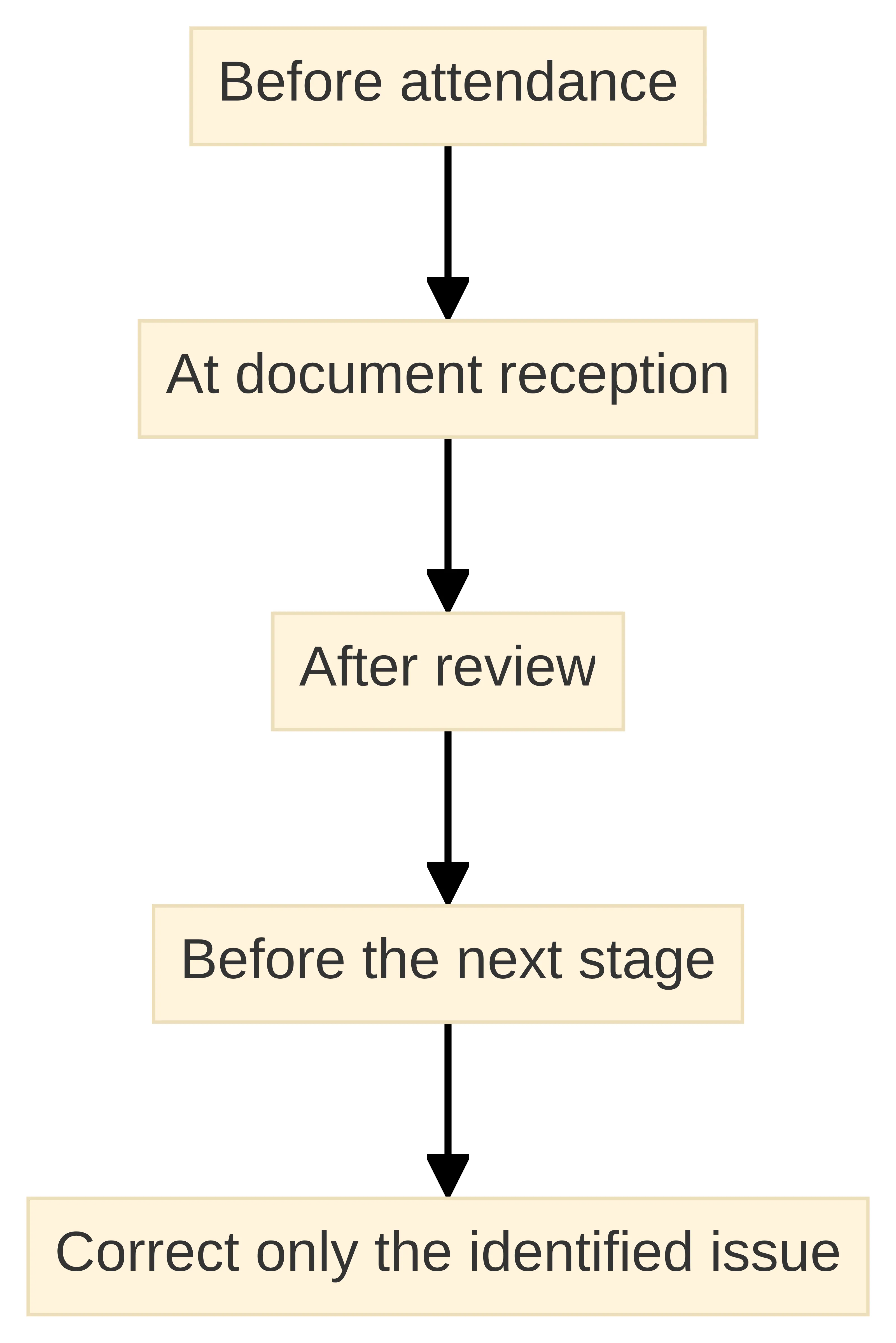
Use the appointment in this order:
- Before attendance: Confirm the office, route, appointment requirement, people who must appear, and the current document list.
- At document reception: Present the originals and copies requested by that office. Be prepared for the staff to compare identity, names, family relationships, and nationality evidence.
- After review: Record any missing document, correction, additional appointment, or next stage the authority gives you. Do not rely on memory for a procedural instruction.
- Before the next stage: Correct only the identified issue and assemble the revised file in the format the office specifies.
For San Diego, the January 2026 handout says dual-nationality appointments are required and available on Friday during the day in that jurisdiction. For Denver, the checklist calls for an original birth certificate, official identification, and originals plus two copies on the appointment day. These examples show why you should confirm the controlling office’s instructions rather than assume that another consulate’s schedule or copy rule applies to you.
Run a failure-point check before submission
A pre-submission failure-point check should test the facts that support your route, not just whether a folder contains many documents. Missing information, inconsistent civil records, and office-specific instructions can each interrupt the process.
Check these points before you submit or attend:
- Route clarity: Can you state the citizenship basis without combining descent, residence, and tax objectives into one claim?
- Parentage evidence: If you rely on a Mexican parent, do your birth record and the parent’s nationality evidence establish the relationship clearly? If both parents are Mexican or only one is Mexican, does your document set follow the applicable office instruction?
- Identity consistency: Do names match across the records you are using? Have you identified every marriage, adoption, amendment, transliteration, or legal name change that may require explanation?
- Residence history: If you are screening naturalization, have you documented the residence status and dates needed to test the category? Have you separated a general five-year route from a possible reduced category?
- Physical documents: Do you have the originals and the number of copies requested by the controlling office? Are the documents legible and in the required form?
- Attendance: Does the correct person, parent, spouse, or other required participant know when and where to appear?
- Current instructions: Have you confirmed the appointment method, schedule, fees, forms, and filing sequence with the authority responsible for your route?
The San Diego handout requires the registered person and both parents to be present when applicable, while the Denver checklist specifies originals and two copies. The name-matching warning in Mexican family-unity guidance also shows why inconsistent records should be identified before filing. If a problem changes the legal basis, the qualifying period, or the identity evidence, stop and obtain route-specific guidance rather than submitting an incomplete explanation.
Keep three legal statuses separate
Citizenship, residence permission, and tax residency answer three different questions. Citizenship concerns your nationality status. A residence permit concerns permission to live in a country under a particular immigration category. Tax residency concerns the rules that determine where tax obligations may attach to your facts.
Mexican citizenship can be acquired through routes such as descent, contribution, and naturalization.
Our tax-residency guidance distinguishes residence permits from tax residency and warns that the two follow different rules. It also notes that accidentally becoming tax resident in multiple countries could result in double taxation. Treat those consequences as a separate cross-border analysis, especially if you own a business, receive income from more than one country, maintain a home elsewhere, or expect to change where you work.
Keep three separate questions in your case notes:
- What citizenship route may apply?
- What permission, if any, do you need to live in Mexico?
- Which countries’ tax-residency rules may apply to your facts and timing?
Answer the first question through the nationality process. Do not use a citizenship application as a substitute for immigration or tax analysis.
Choose the right professional review
Case-specific review becomes appropriate when your route, family records, residence history, or cross-border position is unclear. A nationality or immigration professional can help analyze the Mexican citizenship basis and document path, while an international tax professional can address tax-residency and cross-border tax questions separately.
Seek route-specific nationality or immigration guidance before acting if:
- You are unsure whether your facts support descent registration or naturalization.
- Your parent’s nationality, your birth record, or another civil record is incomplete or inconsistent.
- You are relying on marriage, a Mexican-born child, adoption, or another reduced naturalization category.
- Your residence history includes status changes, gaps, or travel that may affect the qualifying-period analysis.
- The responsible office has given you conflicting instructions or requested a correction you do not understand.
Seek international tax review when the citizenship decision may interact with residence in another country, business ownership, income sources, or multiple tax-residency rules. Our guidance states that consulting a tax professional specializing in international law can help manage the complexities of tax residency and residence permits.
Keep these reviews distinct. A professional reviewing nationality eligibility is not automatically resolving your tax position, and a tax review is not a substitute for confirming the Mexican citizenship procedure.
Use the current-authority checklist before acting
Your Mexican citizenship preparation is ready for the next decision when you can name the route, connect it to evidence, identify the responsible office, and explain which current instruction controls the filing.
Use this final checklist:
- Name the route: descent or birth registration, standard naturalization, marriage-related naturalization, a Mexican-child category, or another basis requiring confirmation.
- List the evidence: identify the records that prove the selected basis, then separate originals, copies, identity documents, civil records, residence records, and any documents requiring certification.
- Resolve contradictions: do not rely on a five-year, two-year, or one-year period until the authority confirms that the category and residence calculation fit your facts.
- Identify the office: confirm the consulate, civil-registration office, SRE process, or other designated authority responsible for your case.
- Confirm the procedure: check the current appointment method, forms, fees, copies, attendance rules, document format, and next stage directly with that authority.
- Separate the consequences: keep citizenship, residence permission, and tax residency as distinct decisions.
- Choose the review level: obtain case-specific nationality or immigration guidance when the route or records are uncertain, and separate international tax advice when cross-border tax issues may change.
A qualified professional should decide individual suitability when the facts are disputed, incomplete, or legally complex. Once your route and evidence file are organized, you can choose between proceeding under the confirmed instructions and obtaining focused help with the unresolved points.
Ask the team
Have a question about your own situation?
Tell us where you pay tax today and what you want to achieve. We will review your case and get back to you within 1 business day.